THE HIGH TABLE
Established: 2023-11-17
Chat room: #BARBARUS
- No holds barred
- Weapons
- Extreme violence
- Blood
- Death
A worldwide organization of men trained for violent, bloody, and even deadly combat. Their competence is indicated by their qualifications, from the lowest to the highest, reserved for an elite.


You Will Live With This
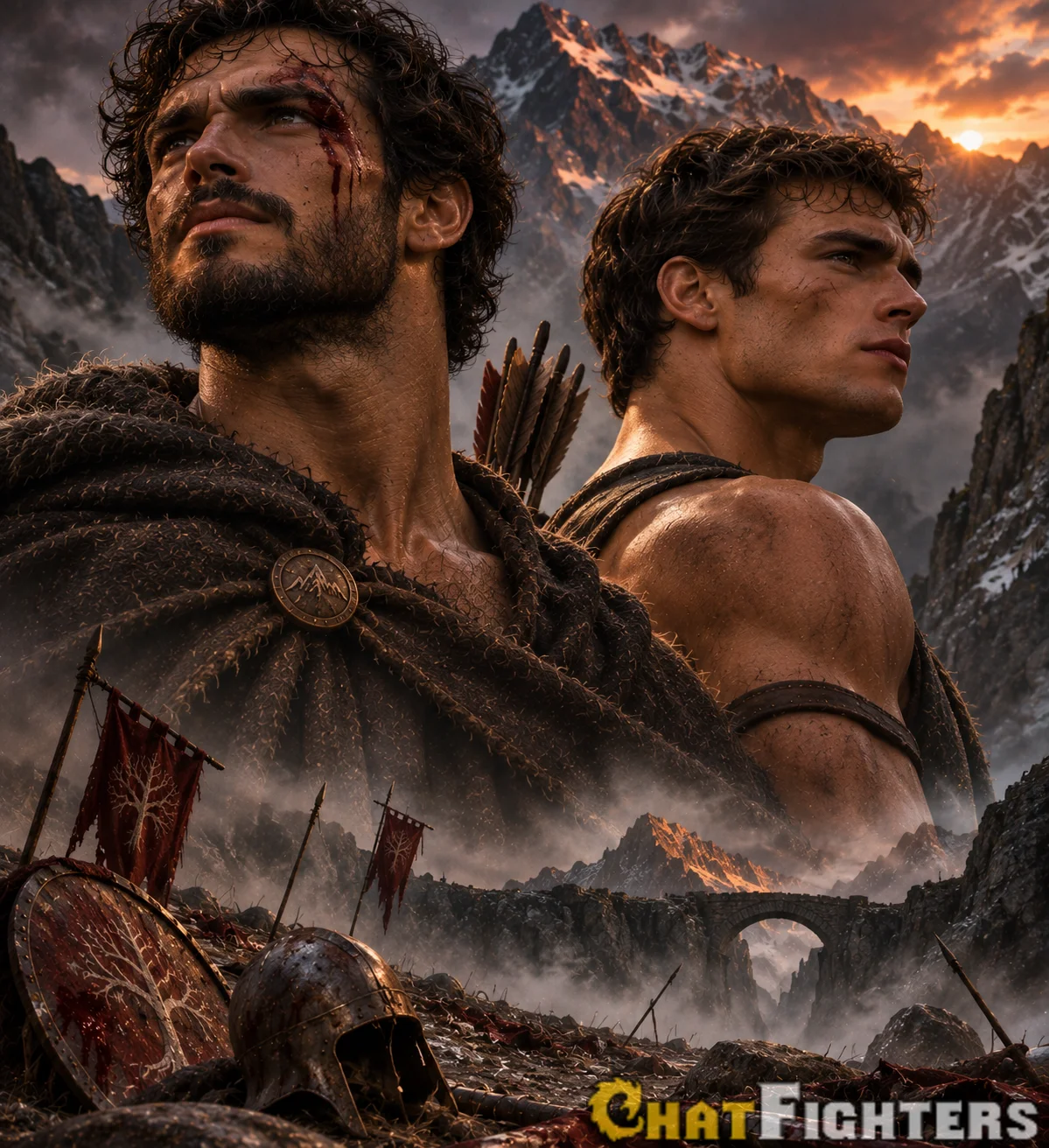
The knife slipped beneath the whetstone with a soft, familiar hiss.
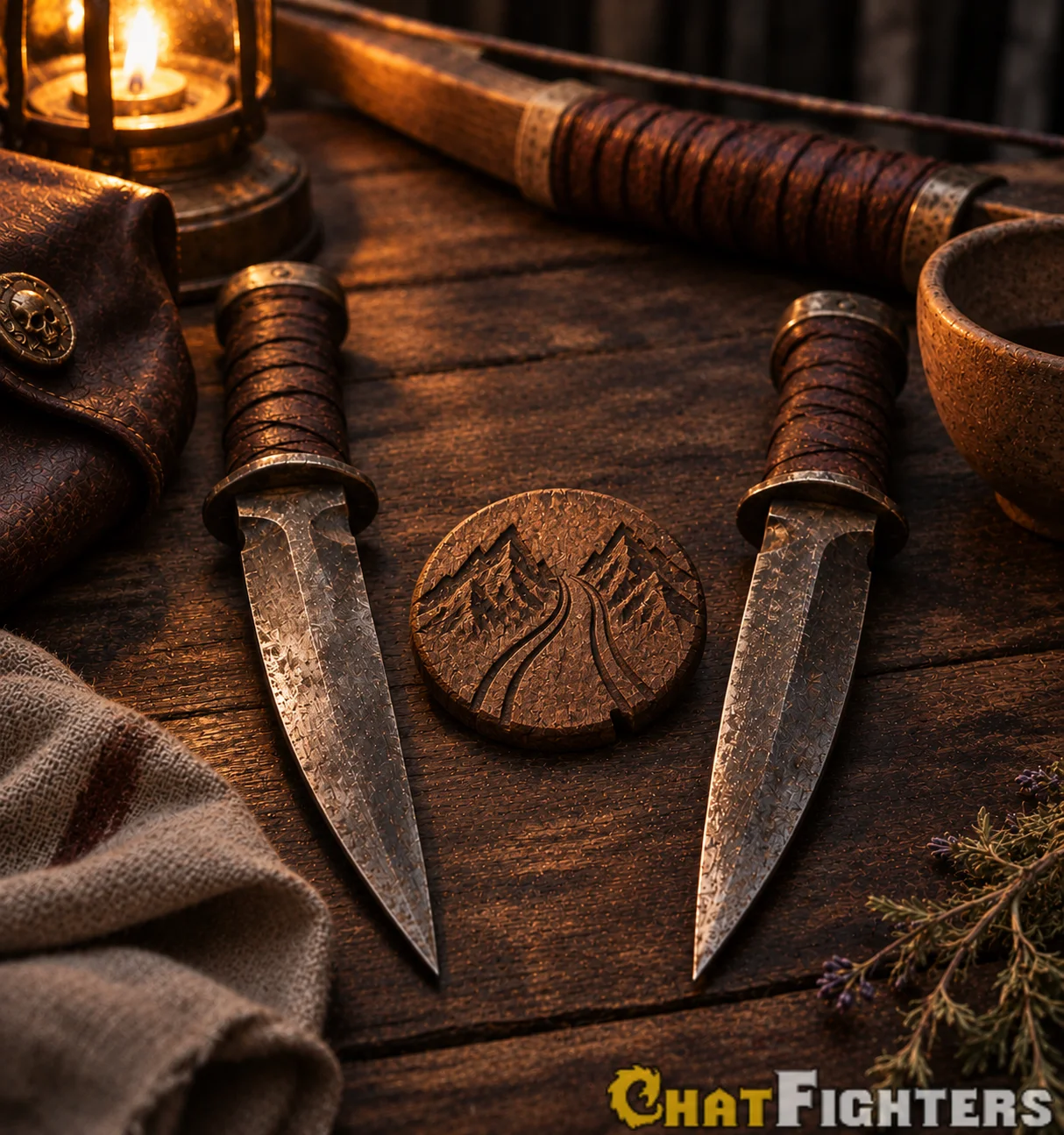
Nerin turned the blade toward the lamplight, examining its edge. Satisfied, he wiped it clean and laid it beside its twin on the low table.
Across the room, Callen sat on the bed he and Nerin shared, winding fresh leather around the grip of his bow. He had been working at it for the better part of an hour, occasionally testing the binding against his palm.
“You have been staring at that knife for ten minutes,” Callen said.
“You have been wrapping that bow for an hour.”
“It is a good bow.”
“It was a good bow before you started.”
Callen smiled without looking up.
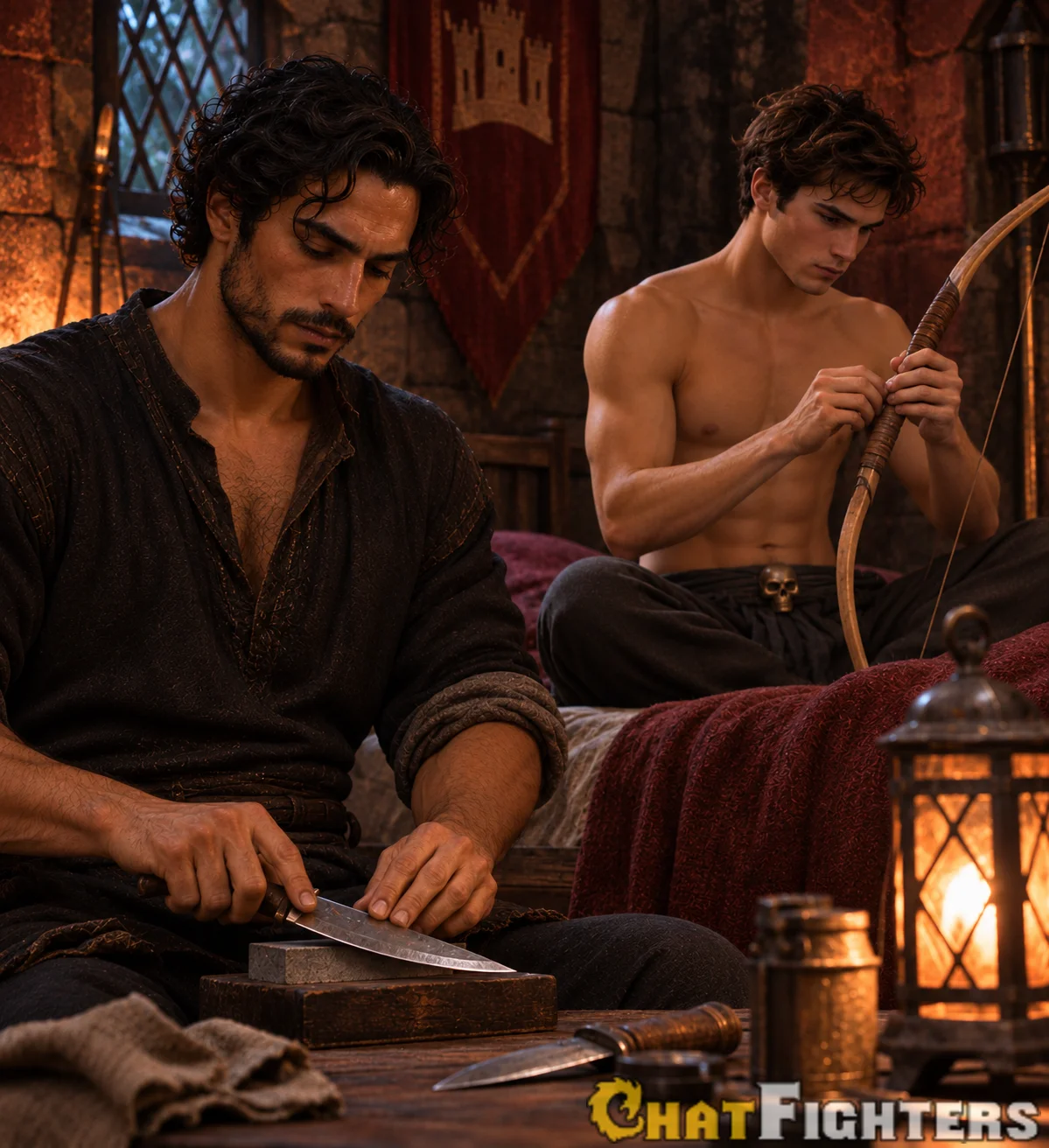
Nerin opened his medical bag. After treating three soldiers injured during training, his supplies were in disorder. He began sorting the remaining linen, herbs, and concoctions into small jars. At the bottom of the bag, he checked a small horn vessel wrapped in damp cloth, then set it carefully beside the clean dressings.
A dark curl fell across his forehead. He pushed it aside, his fingers brushing the faint line through his left eyebrow.
Callen noticed immediately. “You do that sometimes.”
“Do what?”
“Touch your eyebrow.”
Nerin lowered his hand. “I have an eyebrow. Occasionally I touch it.”
“You know what I mean.” Callen set his bow across his knees. “I have never asked you how you got that scar.”
“You have demonstrated admirable restraint.” This time, Nerin smiled without looking up.
“Was it a sword?”
“A blade.”
“A large one?”
“Large enough.”
“Were you fighting?”
“Eventually.”
Callen laughed. “Eventually?”
Nerin began to speak quietly. “There was an old man in the Northern Holds.”
“An old man gave you that scar?”
“No.”
“What did he do?”
Nerin reached into the bottom of his leather bag and withdrew a small wooden token, darkened by years of handling. Two shallow lines, like a path, crossed between two towering carved shapes of mountains.
Callen held out his hand. “Who gave this to you?”
“The old man.”
“What does it mean?”
“I never learned.”
Callen turned the token over. Its back was smooth except for a small notch near one edge. “Tell me about him.”
Nerin watched the lamplight move across the wood. “His name was Torven Haldr,” he said. “He was the most stubborn man I had ever met.”
Callen raised an eyebrow. “That is considerable praise coming from you.”
Nerin gave Callen an all too familiar look and continued speaking.
-
The Northern Holds had no roads worth naming.
I remember narrow tracks through stone, frozen streams mistaken for paths, and ancient trails that vanished beneath the snow. Beyond them rose mountains capable of burying travelers without warning.
I had come north with a delegation from Karth Vale to negotiate passage through a crossing that would shorten the supply route between the Red Citadels and their western settlements.
I was twenty-one, younger than most men entrusted with military planning. My commanders valued my ability to read terrain and recognize weaknesses in defensive positions. My training as a healer made me useful for another reason. I was less accomplished at accepting advice.
Our guide, Rorik Seld, noticed immediately. “You keep looking at the mountains as though they are waiting for orders,” he remarked.
“Mountains are more reliable than soldiers.”
“You have never seen one fall.”
I glanced at the stocky pathfinder. “I suspect you intend to tell me about it.”
“Only if you continue talking.”
Our destination was a small timber home sheltered beneath dark cliffs. Torven received us beside his hearth.
He was sixty-five, broad-shouldered and imposing, with long dark chestnut colored hair, a heavy beard, and sharp gray eyes. His weathered face bore a crooked nose and the marks of a difficult life.
His son Eirik stood beside him, a younger reflection of the same features, though his hair and beard were cut short.
As negotiations began, I realized that Eirik handled most of the settlement's affairs. Torven offered occasional corrections, but his son knew the stores, patrols, bridges, and men available to maintain the crossing.
I also noticed that Torven favored his left arm. “What happened to your forearm?” I asked.
“Nothing worth discussing.”
“Show me.”
Torven regarded me coolly. “Do all southern healers give orders before they introduce themselves?”
“Only when the patient is determined to be difficult.”
Eirik concealed a smile.
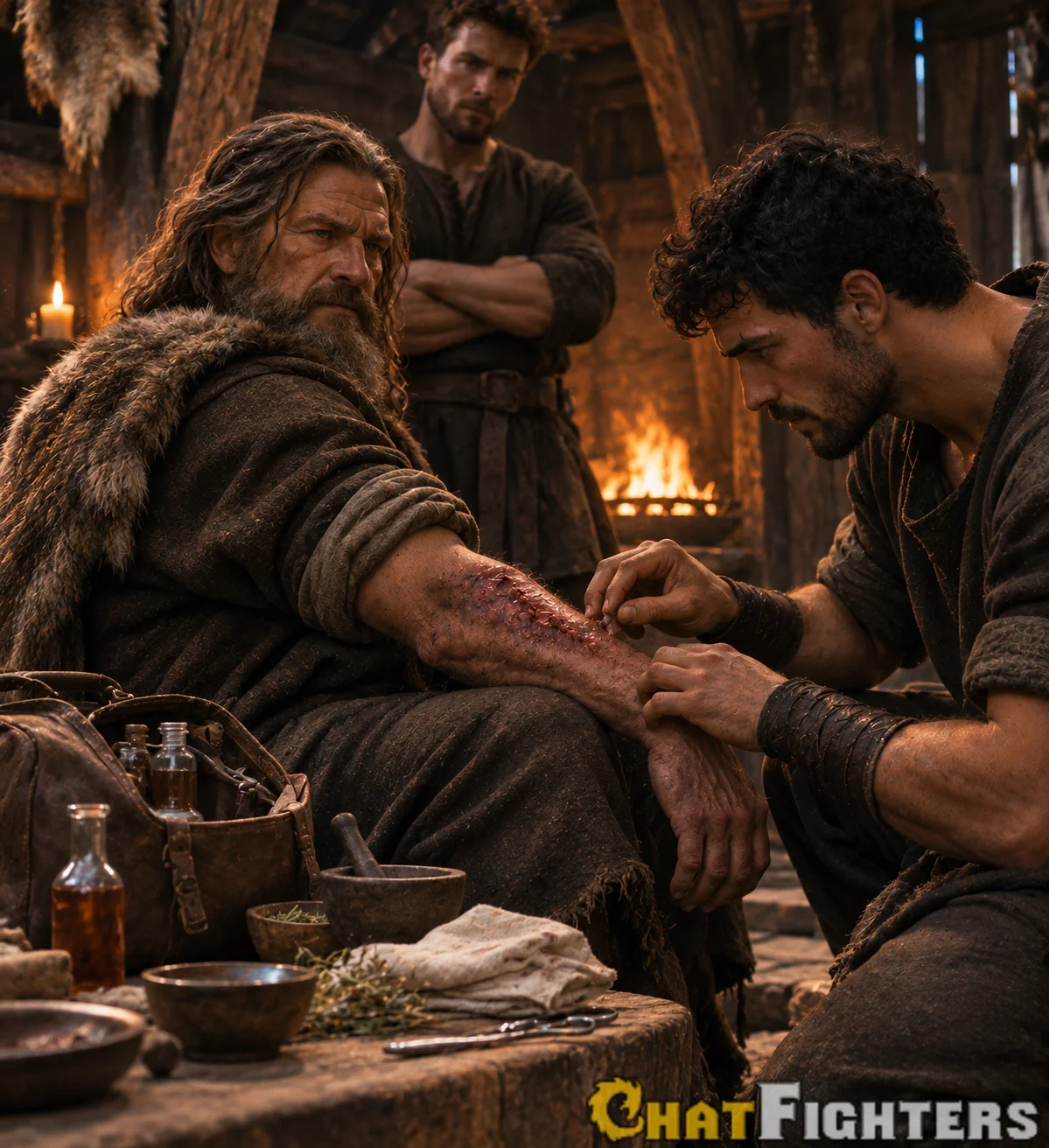
Reluctantly, Torven pushed back his sleeve. Beneath a stained dressing lay a deep cut, its edges swollen and inflamed.
“How long?” I asked.
“Ten days.”
“How?”
“Hunting.”
I examined the wound. “Your leech has seen this?”
“We have no leech.” Eirik answered. “My father has been treating it himself.”
Torven gave a humorless grunt. “And I have kept the arm.”
“You have kept it despite your treatment,” I said.
I examined the swollen edges more closely. The cut was inflamed, but I found no pocket of pus that needed opening. “You have an infection. It needs cleaning and rest.”
“I have work.”
“You will have to do less of it.”
“I have lived sixty-five years without your advice.”
“I should like to see you manage sixty-six.”
Torven almost smiled.
I washed the wound with clean, cooled boiled water, removed the dirt caught along its edges, and secured a fresh dressing. My masters at Karth Vale had called the discipline leechcraft: the patient work of knowing what to cut, what to bind, and what to leave untouched. Torven regarded it as an elaborate excuse to cause him pain. He endured the treatment without complaint, though his jaw tightened whenever I touched the injured flesh.
“No lifting,” I instructed. “No climbing. No fighting.”
“That may be difficult.”
“Why?”
“I am going into the mountains tomorrow.”
Thirty years earlier, Torven had commanded a retreat through the northern crossing.
His company had been pursued by a force nearly twice its size. To save the others, he ordered a handful of men to hold the passage.
His younger brother led them.
None returned.
“We promised each other when we were boys,” Torven told me, “that neither would leave the other behind.”
We stood beside the longhouse hearth. Eirik remained near the doorway, listening.
“Your brother obeyed an order that saved lives,” I said.
“I know.”
“You made the necessary decision.”
Torven watched the flames. “That has never been the difficult part.”
Recent thawing exposed part of the battlefield. Hunters had found bones and fragments of armor, and Torven intended to search for his brother's remains.
Eirik had organized an expedition, but his father insisted on joining it.
“You cannot safely climb those slopes with an infected arm,” I said.
“I know the crossing.”
“Knowing a place does not make you immune to its dangers.”
“No. But it means I know which dangers are worth taking.”
I looked toward Eirik. “Can you persuade him?”
“I have been trying for three days.”
Torven chuckled.
I studied the old man. “What happens to your son if you die out there?”
Torven glanced at Eirik, his expression softening. “He becomes the man I have raised him to be.”
Eirik looked away.
“I will accompany you,” I said.
Torven frowned. “I did not ask you to.”
“I know.”
They soon changed into their warmer clothing for the trip up the mountain pass. Eirik could not convince Torven to stay.
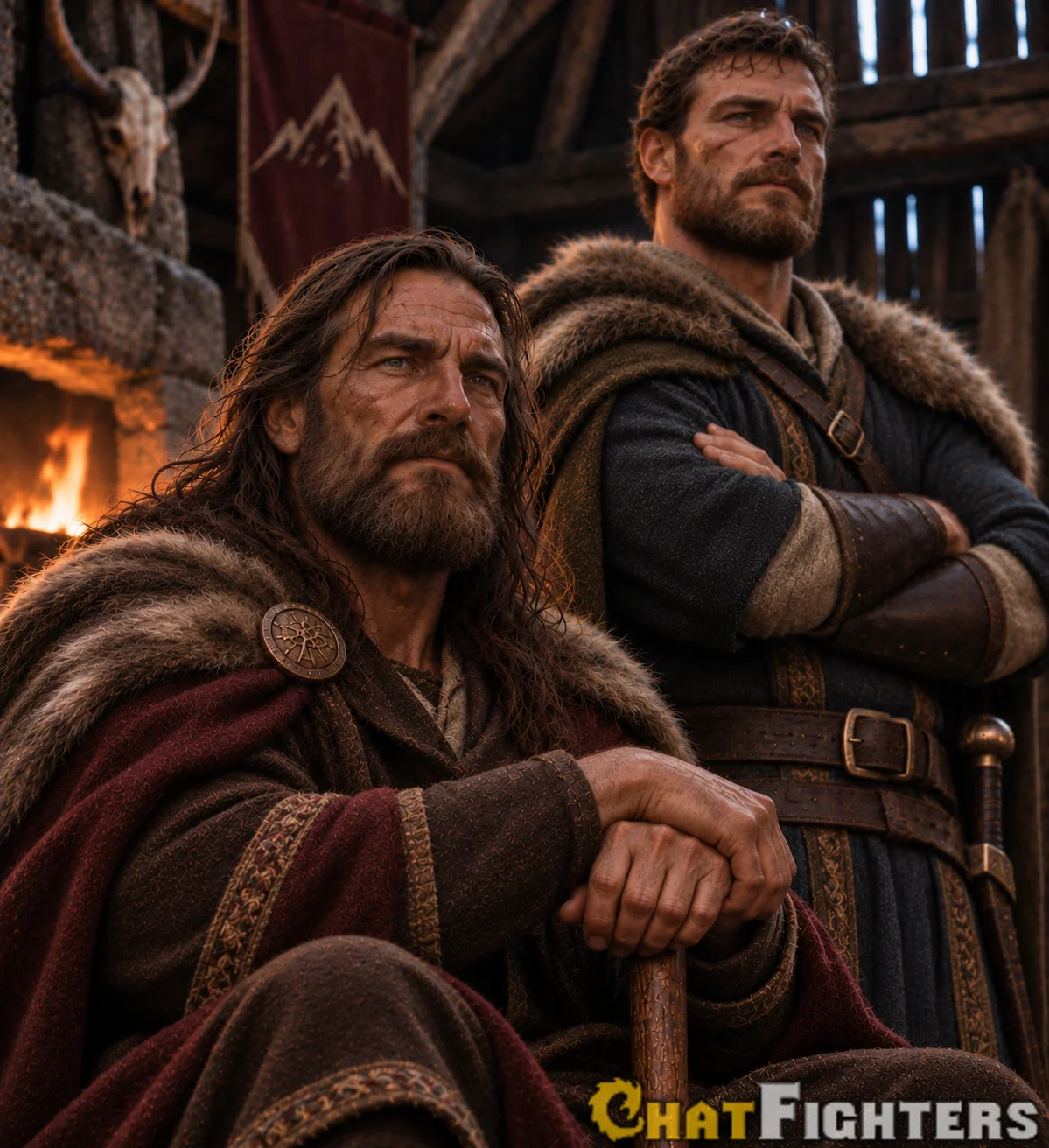
We departed at dawn with seven armed men.
Rorik led us through the thawing valley. Eirik carried a hunting spear, while Torven walked with his injured arm bound beneath his cloak.
Near midday, I stopped beside disturbed snow. “Tracks.”
Rorik crouched beside me. “Salvagers. They come from the western valleys when the snow retreats.”
“How many?”
“Hard to say.”
“More than five.”
Rorik glanced at me. “You count footprints like soldiers.”
“I count anything that might become a problem.”
The tracks led toward the old crossing, where the path narrowed between a steep wall and a ravine.
“Is there another way?” I asked.
Torven pointed toward the slope. “An old hunters' path. It reaches the battlefield from above.”
“Too steep in winter,” Rorik said. “But the thaw has opened it.”
“Can we retreat along it?”
“Slowly.”
I considered the terrain. “We use the upper path. Leave two men to secure the junction below. If trouble begins, I want a clear way out.”
Rorik nodded.
Torven raised an eyebrow. “You listened.”
“I do occasionally.”
“Perhaps there is hope for you.”
We reached the battlefield in the late afternoon.
The crossing was a narrow shelf of stone above a ravine. Rusted spearheads and broken armor lay among the rocks, remnants of men who had died there decades earlier.
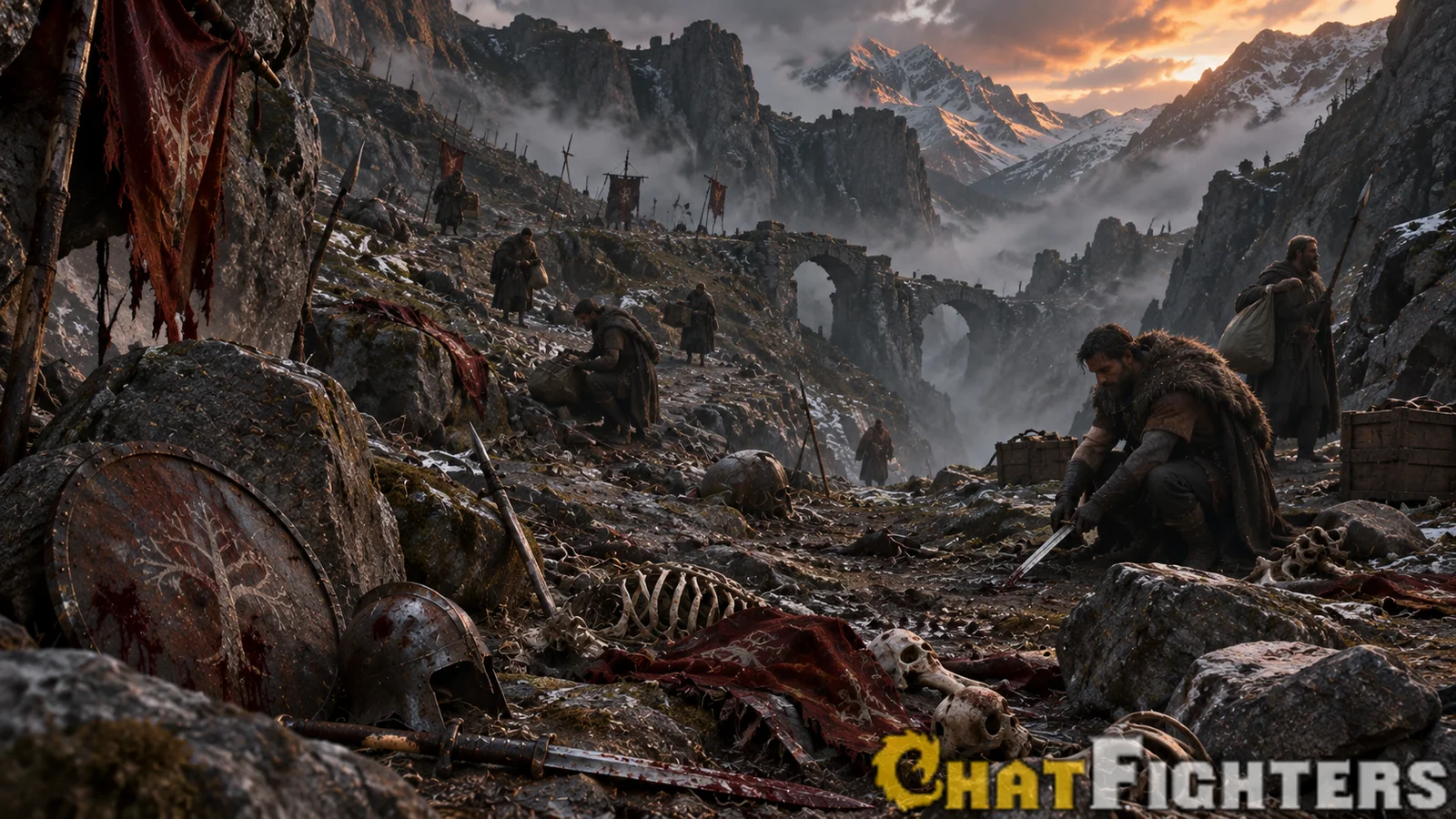
Eleven salvagers were working among the debris.
Their leader, Sten Varrek, was a lean, weathered man wearing a patched cloak and mismatched pieces of armor.
He raised a hand. “Far enough.”
Eirik stepped forward.
“We have come to recover one of our dead.”
“There are many dead here.”
“My uncle fell at this crossing thirty years ago. We will pay for any possessions you have recovered.”
Sten was cautious but willing to negotiate. His settlement needed iron for tools and fittings. Eirik offered grain and preserved meat in exchange for the personal belongings and any remains they could identify.
The discussion was progressing when Torven saw the brooch.
It lay among the salvaged iron, marked with two crossing lines beneath the shape of a mountain pass.
“That belonged to my brother.”
Sten looked toward the pile. “It can be part of the exchange.”
“Give it to me.”
“Wait until we have agreed.”
Torven reached for the brooch.
A young salvager raised his spear. “Stay back.”
“Lower your weapon,” I said.
The young man hesitated.
Torven reached again.
The spear thrust forward.
Eirik struck it aside, and one of his fighters lunged to protect him. A salvager fell with a knife wound across his chest.
His companions shouted.
Sten ordered them back, but the injured man's brother rushed forward with a spear. Another salvager, believing their leader had been attacked, joined him.
One of Eirik's men fell bleeding.
I drew my knives. “Back to the passage!”
The fighting spread across the narrow shelf. Sten shouted for his men to stop, but those nearest the wounded salvager were no longer listening. Farther away, others saw only armed strangers attacking their companions.
I understood how quickly a misunderstanding could become a battle. Explanations would accomplish nothing while spears were moving.
“Eirik, take the wounded. Rorik, secure the upper path!”
Three men followed me toward the narrowest part of the crossing. “Hold here!”
The first attacker came with a spear. I turned aside, caught the shaft against my forearm guard, and slashed across the man's hand. The weapon fell. A blow from the pommel of my second knife drove him backward.
The passage allowed only two men to fight beside one another. I intended to make that limitation count.
A sword struck toward my shoulder.
I caught it on my knives, but the force drove me against the rock wall. My opponent was larger and stronger, with enough reach to keep me at a disadvantage.
I shifted my footing and drew him closer.
The sword struck stone. I cut across his forearm. He recoiled and swung again.
I ducked.
Pain flashed across my forehead. Blood spilled into my left eye.
I staggered, suddenly unable to see clearly on that side. My opponent advanced.
I lowered my stance, keeping the wall close to my injured side. When the sword came again, I stepped inside its reach and drove a knife into the muscle above his knee.
He collapsed.
I withdrew the blade and fell back.
“Left flank!” Rorik shouted.
Two salvagers had climbed onto the rocks overlooking our retreat.
Rorik loosed an arrow, forcing one behind cover, but the second continued toward the upper path.
Eirik was helping the wounded soldier away.
Torven remained near the battlefield, searching among the stones.
“Father!” Eirik shouted.
Torven turned, the iron brooch clenched in his right hand.
I saw the approaching fighters. Our retreat would be cut off unless someone held the passage long enough for the wounded to escape.
“I will stay,” Torven said. His injured arm hung close to his body.
“No,” I answered.
“I know this crossing.”
“You can barely use your arm.”
“I have fought with one arm before.”
“Not against six men.”
Torven stepped closer. “This is where my brother died.”
“I know.”
“Let me finish what I came here to do.”
I glanced toward the approaching salvagers. There was no time to argue.
“Eirik, take your father and the wounded. Rorik knows the way.”
Torven's face hardened. “You do not command me.”
“No,” I said. “But I command the retreat.”
Eirik hesitated.
His father looked at him. “Leave me.”
Eirik's jaw tightened. He took Torven by his uninjured arm. “We are going.”
“Eirik.”
“We are going, Father.”
For a moment, I thought Torven might strike his son. Instead, the old man looked past him toward the crossing. The anger drained from his face, leaving something I recognized but could not name.
Eirik led him away.
I turned to the remaining fighter. “Help me with those stones.”
We dragged loose rocks across the narrow passage, building an obstruction. The uneven footing would slow the pursuit.
The first salvager climbed over it. I cut across his leg and forced him backward. Another attacked with a spear.
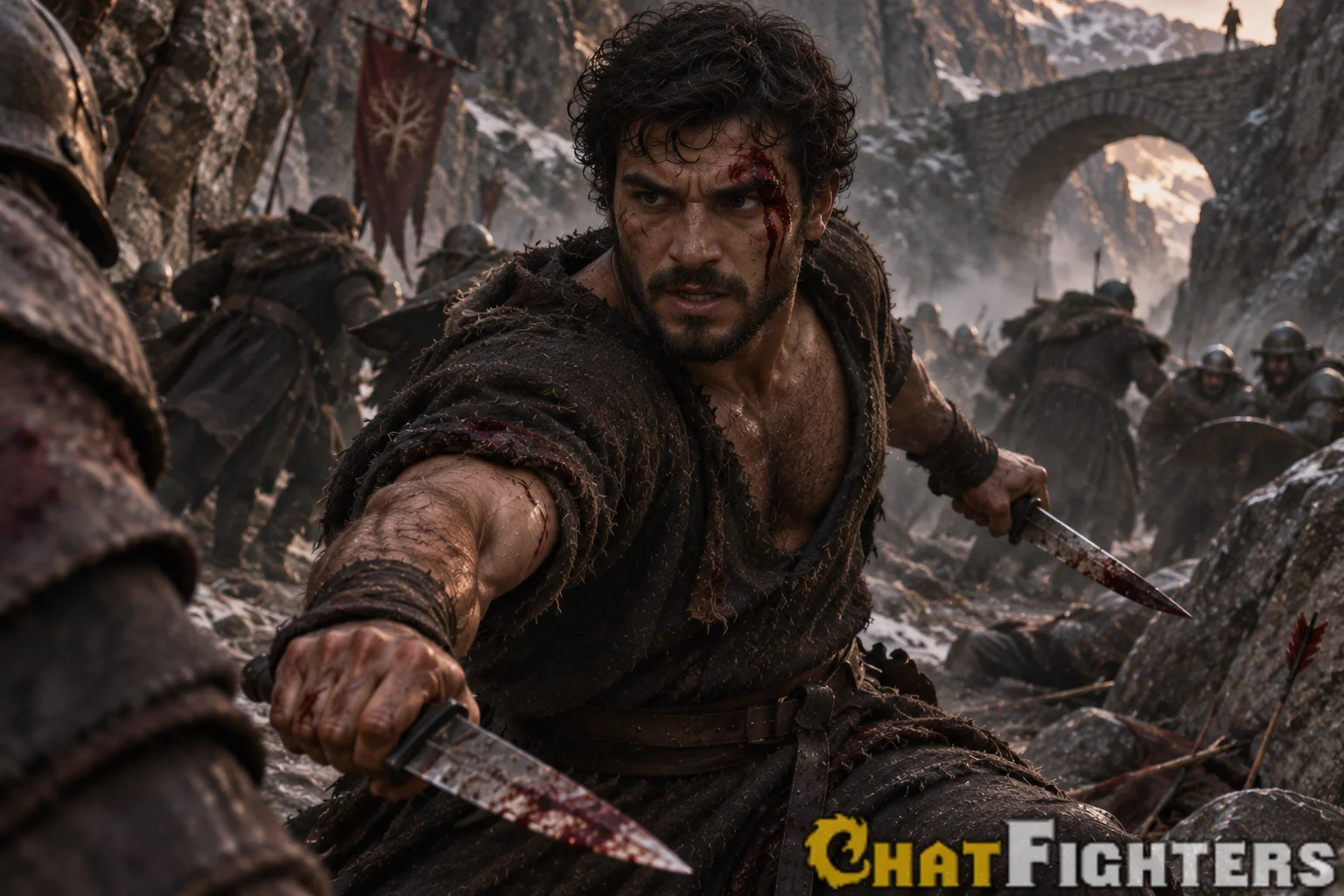
I caught the shaft, twisted, and drove my shoulder into the man's chest. Both of us stumbled toward the ravine. For one terrible instant, I felt empty air beneath my heel.
I threw myself sideways, striking with one knife as my opponent scrambled to regain his footing.
A shout rang out from above. “Enough!”
Sten stood on the rocks overlooking the crossing.
One of his men protested. “They killed Harek!”
“And more will die if you follow them!”
Sten pointed toward the wounded salvager being carried away. “Get him down the mountain. Now!” His men hesitated.
Sten looked directly at me. “Take your people and leave.”
I backed toward the upper path, keeping my knives raised until the salvagers withdrew.
I climbed after the others with blood drying across my face and my left eye nearly swollen shut.
We reached the settlement after dark.
I treated the wounded before allowing another healer to examine my own injury. One of Eirik's men had nearly lost the tip of a finger to a blade. I had cleaned and secured the torn flesh, but by the time we reached shelter it had grown dark and swollen, blood entering the injured part more readily than it could leave.
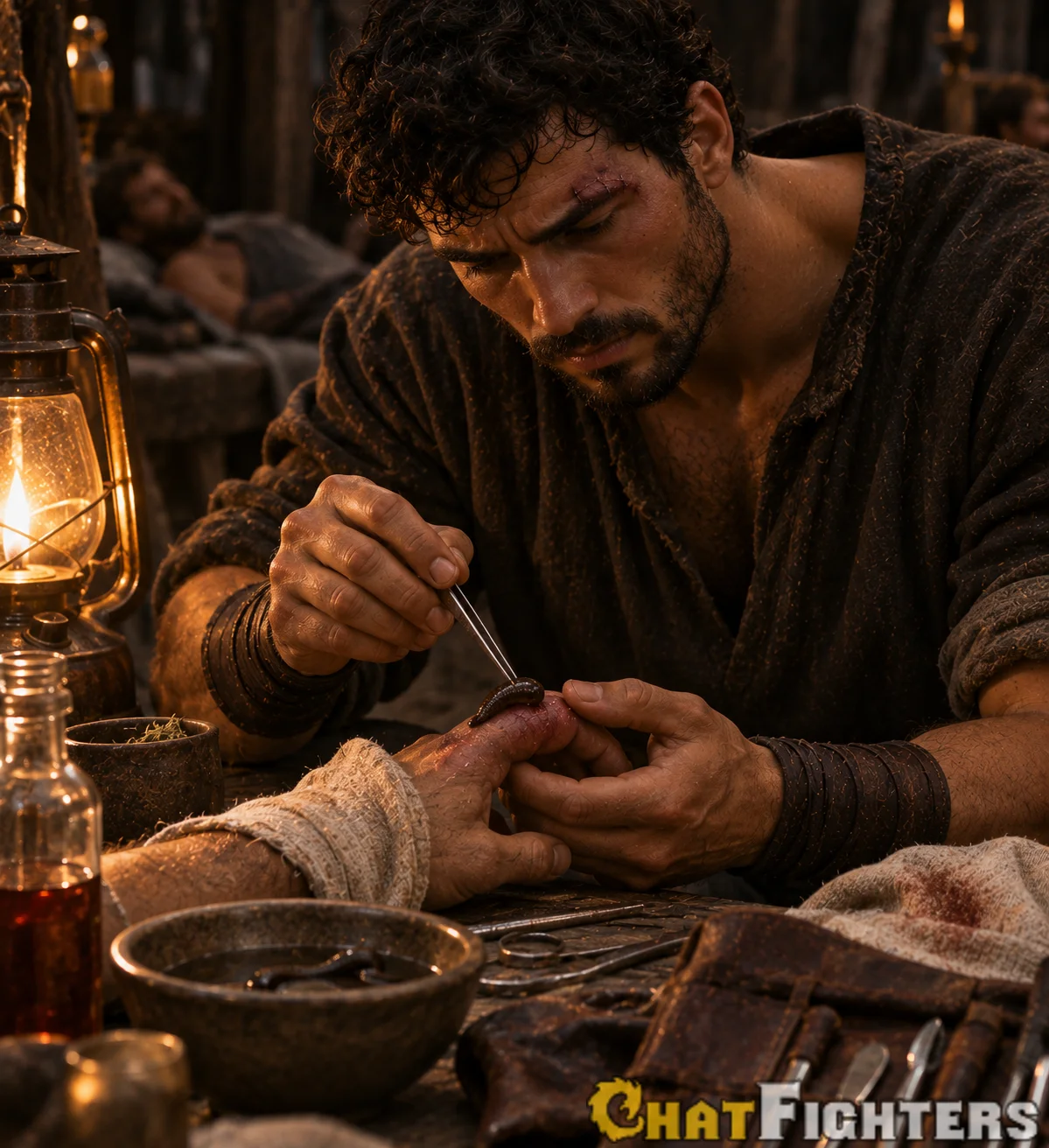
I took the small horn vessel from my satchel and unwrapped its damp cloth. Eirik watched the leech move inside.
“You carry those into battle?” he asked.
“I carry what might keep a man whole.”
“And if it does not?”
“Then I must know when to stop.”
I placed the leech against the congested flesh and watched it closely. Its feeding relieved some of the trapped blood, though the wound would need further attention, and I warned the other healer to watch for renewed bleeding or infection. It was not a remedy for every injury. There were few remedies that were.
Only then did I allow another healer to examine my own injury. The cut through my eyebrow required several stitches. “You will have a scar,” the healer told me. I said nothing.
Torven's forearm had worsened from the journey, but the infection remained localized. I cleaned and dressed it again, insisting for him to rest. He accepted the treatment in silence.
Three days later, he asked me to speak with him privately.
I found him beside the hearth, his long chestnut colored hair tied loosely behind his shoulders. His injured arm rested on a folded blanket.
“You brought everyone home,” Torven said.
“Yes.”
“You fought well.”
“Thank you.”
“You were right about the crossing.”
I waited.
Torven looked toward the fire. “You were wrong about me.”
“You could not have held that passage.”
“Hmph,” Torven grunted.
“You would have died.”
“We will never know now.”
“Your son would have lost his father.”
Torven looked up. “Why was your life yours to spend, and mine not mine?”
I felt my patience thinning. “I had the better chance of surviving.”
“Did you?”
“I survived.”
“That was not what I asked.”
I said nothing.
“My brother died because I ordered him to remain,” Torven said. “I have spent thirty years wondering whether I had the right.”
“You saved the others.”
“Yes.”
“You made the necessary decision.”
“Perhaps. But I was the one who gave the order. I was the one who came home. And I was the one who had to live with it.”
His gaze moved to the stitches above my eye. “You chose to risk your life in that passage. You would not let me risk mine.”
“You could not have survived.”
“You keep telling me whether I would have lived. I am asking why you were the one who got to decide.”
I opened my mouth, but no answer came.
Torven sat back. “You are a clever young man. You see the shape of a battle before other men understand they are standing in one.”
“That is my duty.”
“And you think that because you understand a danger, you understand what it means to the man facing it.”
I looked toward the hearth. “I saved your life.”
“Yes,” Torven said quietly. “You did.”
Neither of us spoke again.
We remained in the Northern Holds for another week.
Eirik completed the negotiations for passage through the mountains. He also arranged an exchange with Sten Varrek's settlement, trading grain and preserved meat for salvaged iron.
Sten's wounded man survived. So did the injured fighter from our expedition.
Torven's brother's remains were recovered and buried beside his family.
I attended the burial from a distance. Torven did not acknowledge me.
On the morning of our departure, Eirik accompanied me to the edge of the settlement.
“My father is recovering,” he said.
“I know.”
“He will use the arm again.”
“If he follows the instructions I left.”
Eirik smiled faintly. “That may be asking too much.”
We walked a little farther.
“You saved his life,” Eirik said.
“Yes.”
“I am grateful.”
I looked at him. “But?”
Eirik glanced toward the mountains. “I am not certain I had the right to make him leave.”
“You made the choice that kept him alive.”
“I know.”
Eirik looked back toward the longhouses. “That is what makes it difficult.”
-
Months later, a small parcel arrived at Karth Vale. Inside was a wooden token bearing two lines between the shape of a mountain pass. There was no letter.
I recognized the emblem from Torven's brother's brooch.
I never learned whether the token was meant as thanks, forgiveness, or a reminder of the question I had failed to answer.
I kept it.
-
Callen turned the token between his fingers.
The lamp had burned low. Outside, the wind moved through the narrow streets of Karth Vale.
“Did he ever forgive you?” Callen asked.
“He never said.”
“And you never went back?”
“No.”
Callen studied the carving. “Perhaps he wanted you to.”
“Perhaps.”
“Maybe he wanted to thank you.”
“Maybe.”
“Or he wanted you to remember him.”
Nerin smiled faintly. “That, at least, he accomplished.”
Callen returned the token.
Nerin held it for a moment before placing it beside his knives.
“Would you do it again?” Callen asked.
Nerin considered the question. He had asked it of himself often enough. “Yes.”
“Even knowing how he felt about it?”
“I would have tried to explain myself better. But I would not have left him there.”
Callen glanced at the horn vessel beside the dressings. “You said you had to know when to stop.”
“I was speaking of a wounded man's hand.”
“I know.” He looked back at Nerin. “You knew how to keep Torven alive.”
“Yes.”
“But did you know when to stop deciding for him?”
Nerin looked at the knives on the table. “I knew how to keep him alive.”
“That was not what I asked.”
For a moment, Nerin could hear Torven's voice in Callen's. He had no better answer now than he had beside that northern hearth.
Callen nodded. “I would not have known when to stop.”
Nerin gave a quiet laugh. “You would have been the first fool volunteering to stay behind.”
“Probably.”
“And I would have had to drag you away.”
“Probably that, too.”
“Gods, you frustrate me.” Nerin smiled without looking at Callen.
“I know.” Callen smiled, too.
Callen set his bow aside and moved closer. He brushed a dark curl from Nerin's forehead, revealing the narrow pale scar through his left eyebrow. It was almost invisible now, noticeable only at this distance.
His thumb traced the line gently.
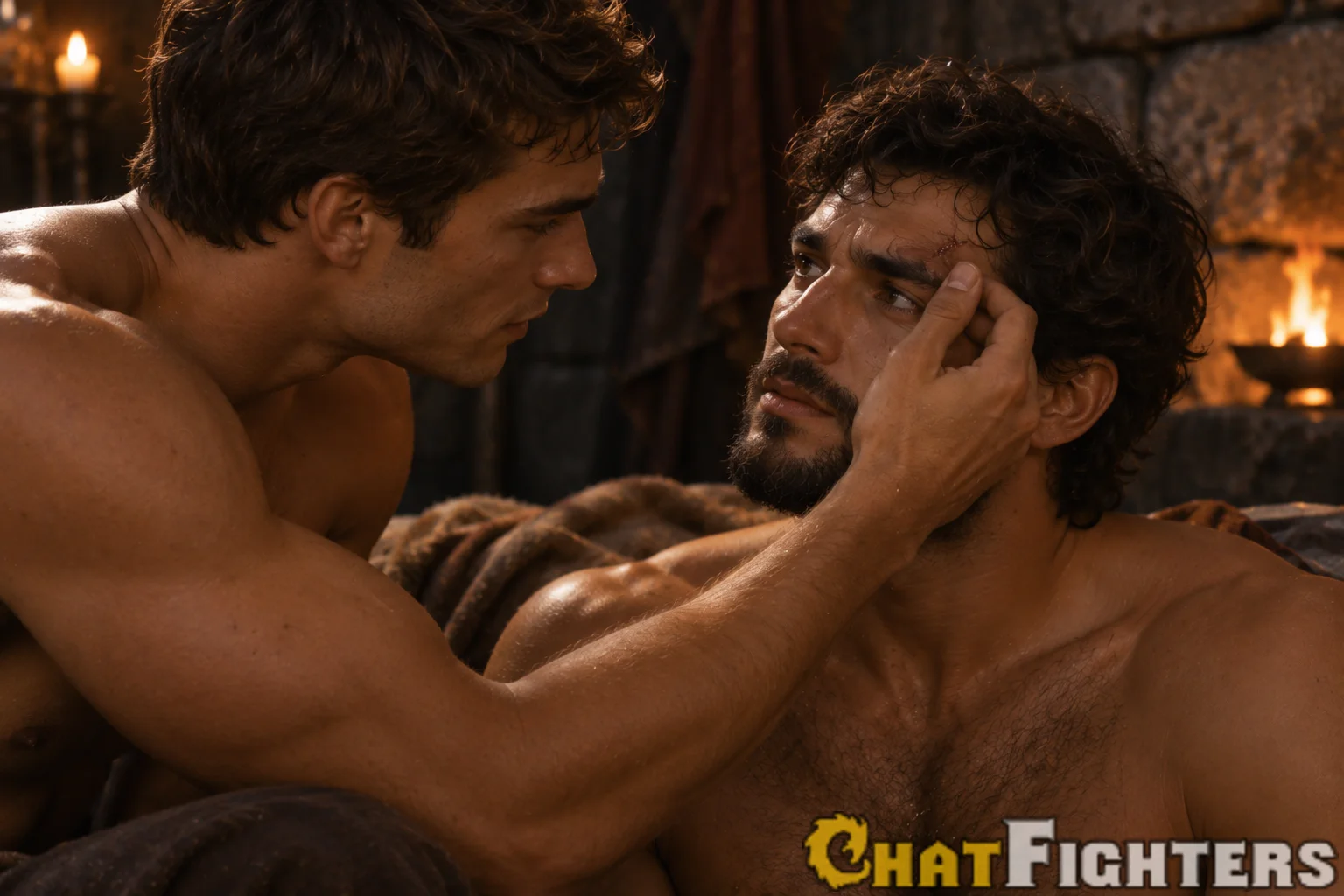
Nerin went still.
“I would have done the same,” Callen said softly.
“I know.”
“If you had stayed behind, I would have come back for you.”
Nerin looked at him for a long moment. “Even if I told you not to?”
Callen smiled. “Especially then.”
Nerin closed his eyes and leaned into the touch.
Published: 2026-11-05, viewed 75 times.
Agent Levi Finley
16 days agoWe leave for those who were trapped
As the culture collapsed
These identity tokens so that perhaps
You remember that our ideals were simple and eternal
They're locked inside these mysterious crystals
We, the pregnant, the sick and insane
We leave you these things, you remember our names
I came across this story and was reminded of a song.
Freaker
18 days agoFor readers who have followed Callen and Nerin’s earlier stories, there’s something familiar about the easy teasing between them. This time, a quiet evening gives Callen the chance to ask about the scar above Nerin’s eye. The answer takes us back to the Northern Holds, where a young Nerin meets Torven, an old soldier determined to return to the mountain pass where his brother died.
Thirty years earlier, Torven ordered his brother to hold the pass so the others could escape. When Nerin tells him he made the necessary decision, Torven replies, “That has never been the difficult part.” That’s the line that gives the journey its weight. Torven knows why he gave the order. He’s still living with what it cost him.
The story works because Callen’s simple question opens up a part of Nerin’s past that still matters to him. If you already know these two, it adds something to the way you read their relationship. If you’re meeting them here, the warmth between them is there from the first exchange.
Thanks, Callen Fortier and Nerin Othari, for sharing *You Will Live With This* with The High Table!