Long Form Roleplayers
Established: 2021-04-21
Chat room: #long_form
- Long-term roleplay
- Descriptive writing
A space for fans of descriptive, long form roleplays of all genres to meet and greet one another

The Last Guest of Emberwane

The bell rang from a tower at the bottom of the ravine.
I stopped on the path. Nerin took another step before he noticed. Two turnip lanterns knocked together against his pack.
“Keep walking,” Nerin said.
“Someone is down there,” I answered, already preparing to run.
“The tower fell three winters ago.”
“Someone could have found the bell.”
“And carried it out of forty feet of broken stone?”
I looked toward the ridge.
Three quick strokes. Three matching sounds. One final, louder stroke.
I recognized it. How could I not?
Our signal for a watchman requesting relief.
I had heard it alone for six nights. This was the first time anyone had heard it with me. Already, it seemed farther away.
Nerin stepped in front of me.
At twenty-five, he was only five years older, but he had learned to look at me as if he had been waiting half his life for me to develop some sense. He kept his black hair cropped short to keep it out of his eyes.
“I see better when I am treating wounds.”
I do not know why those words stuck with me.
A pale scar divided his left eyebrow. He would never tell me how he got it. The climb had brought color back into his tanned, brown face.
“Last time, you followed a voice into a collapsed barracks,” he said.
“I remember.” I think Nerin enjoys bringing up my past injuries. Perhaps healers speak of them as we warriors do of battles.
“I bound your ribs.”
“I remember that, too.”
“Then remember how much you enjoyed breathing for the next six weeks.”
I took his pack and added it to mine, slinging both over my shoulder. His was significantly heavier.
“You are favoring your left side,” he said.
He adjusted the strap away from an old scar near my shoulder. His fingers lingered there for a moment.
“Better?”
I nodded.
He had always noticed when something hurt before I admitted it.
Below us, everything lay white beneath its crust of salt.
The Black Sun had cut our roads first. Then, it salted the fields and poisoned the river. The Red Citadels had guarded those passes for generations. We knew how to stop an army climbing a mountain.
Hunger did not have to climb.
The bell rang once more.
I had already turned away from the ravine when it did.
Nerin caught my elbow.
“Let it finish without you.”
I reluctantly followed him up the path.
Behind us, the bell fell silent. I glanced back once, wondering whether someone was still waiting at the bottom of the ravine.
The thought followed me long after the sound had stopped.
Our destination was the sanctuary standing above the burned fortress.
Someone long ago had chiseled the sanctuary's name into the stone above its entrance. The Black Sun had chiseled it out of existence. Their priests had done the same to every stronghold they occupied. They broke the council stones, burned the family lineage parchments, and punished survivors for speaking the old gods’ names.
I put my thumb into a hollow where a letter had been. For a moment, I thought I could remember.
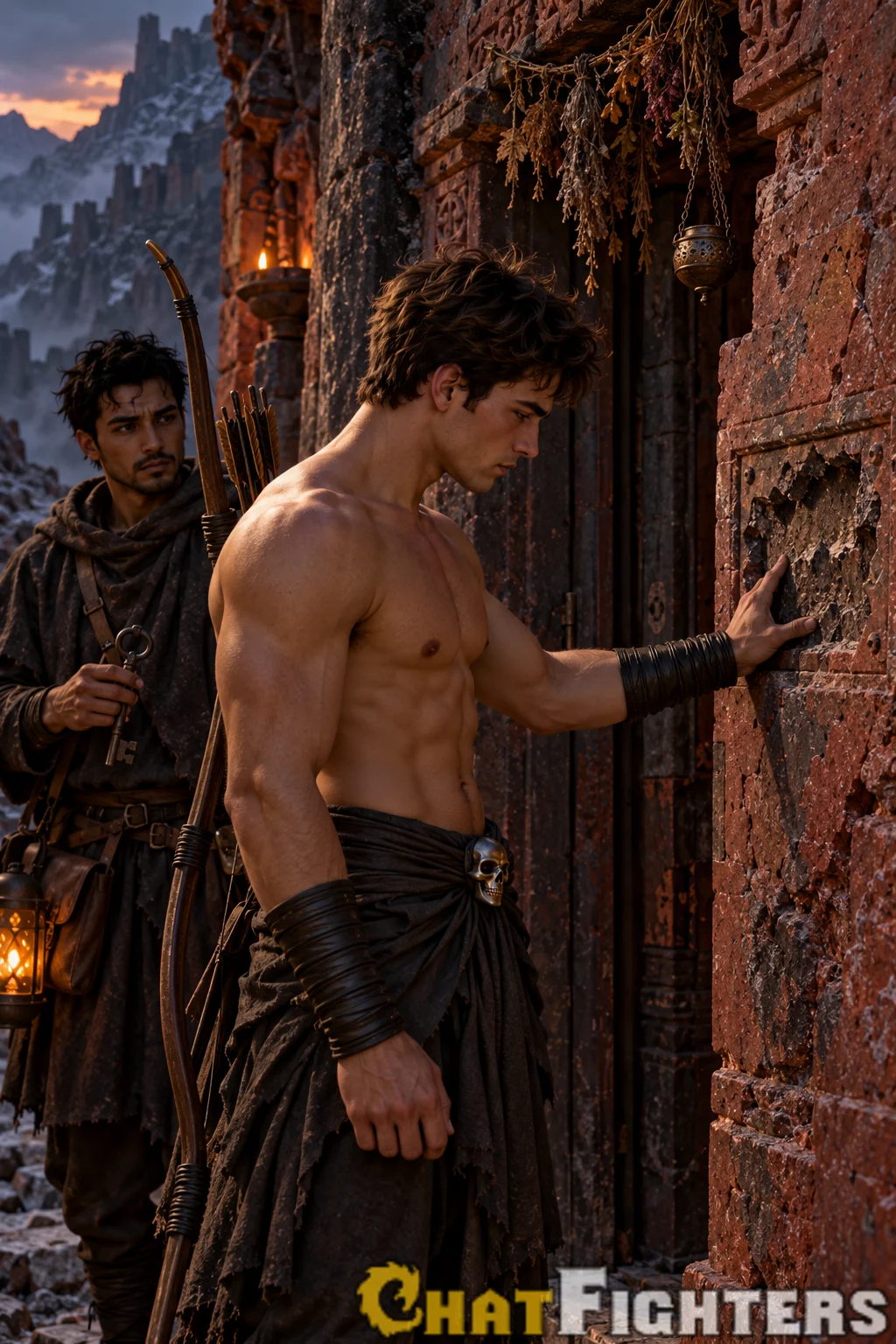
Nerin unlocked the door. “Inside. We have work to do.”
It was the last day of Ashfall, the final harvest month.
Before our ruin, this was the day the captains closed the high passes for winter. Shepherds came down from the upper slopes. The last patrols returned. Grain was counted, roofs repaired, and the people sharing a hearth were named and accounted for before the snow shut them in.
At sunset, we kept Emberwane. The fading of the last watchfire.
We lowered our lamps to remember those who had not returned during the year. Each fortress left one beacon burning. As a boy, I stood above the eastern gate and counted eleven across the mountains.
My father would lift me onto the wall. I used to complain when he made me come down.
Nerin unlocked the door and went in. “Wood first,” he said.
I set about collecting it, letting Nerin settle into the sanctuary as comfortably as he could. When I returned, he gave me that knowing look.
I had brought too much firewood.
“We are staying one night, Callen.”
“It might be cold, Nerin.”
“You said that the winter we shared quarters above the infirmary.”
“And you complained about the cold every morning.”
“Because you stole the blankets.”
“You could have taken them back.”
He smiled faintly. “You were finally sleeping. I did not want to wake you.”
I remembered those mornings. Snow covered most of the peaks, the hearth reduced to embers, and Nerin lying beside me with one arm around my waist because I had taken nearly every blanket. He would be cold when he woke, but he never complained. He wanted to be sure I had slept through the night.
The sanctuary smelled of soot and dried herbs.
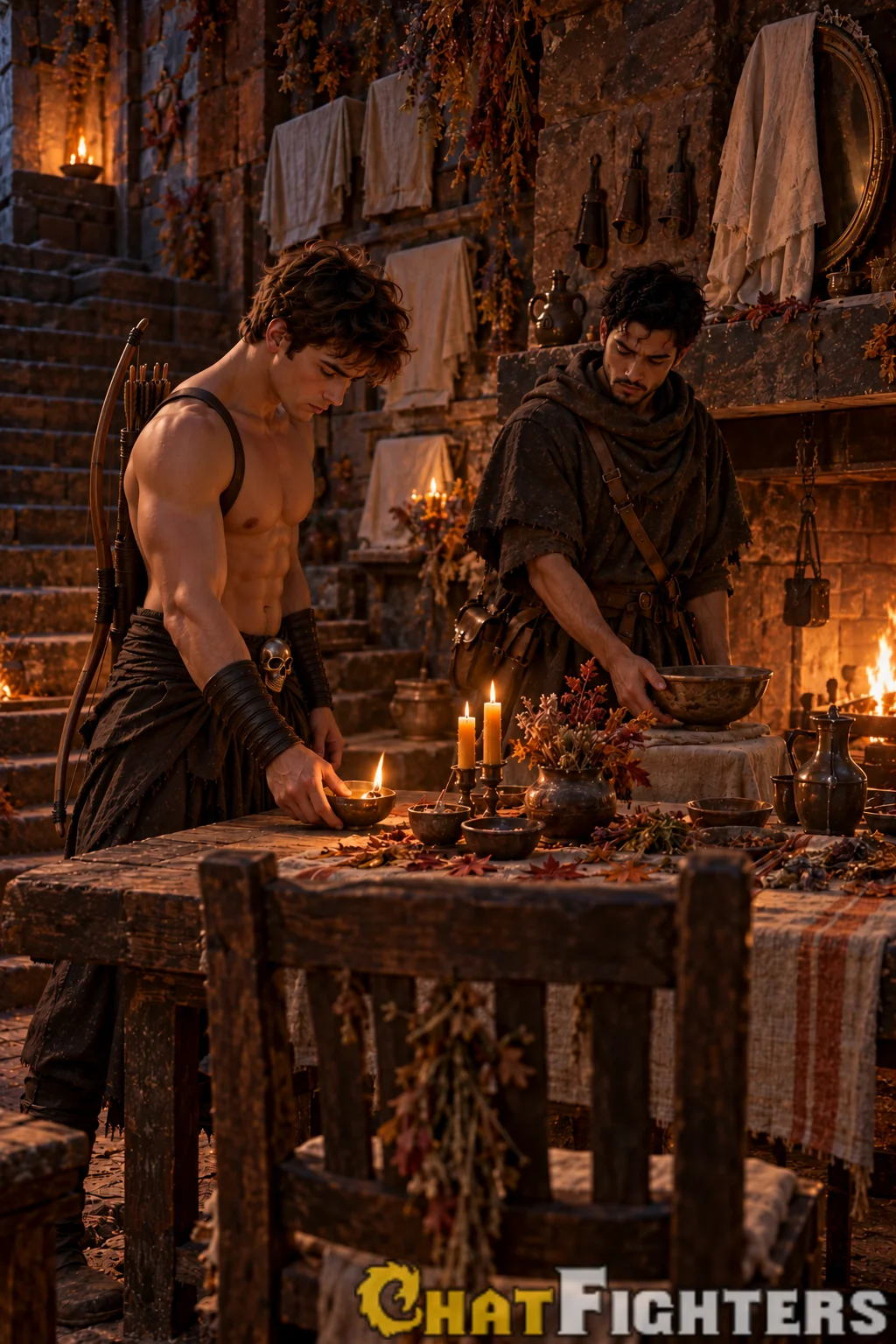
A long table stood before the hearth. Memorial carvings lined the wall. Three worn finger guards hung above the mantel, offerings from archers who had survived wounds they should not have. I recognized the smallest.
Nerin saw me looking.
“Not tonight.”
“I did not say anything.”
“You stopped breathing.”
He knew things like that.
He knew I ground my teeth before a nightmare and rubbed the inside of my left wrist when I was trying not to admit pain. He knew I could sleep through a thunderstorm but woke if someone crossed a room without speaking.
When we had shared winter quarters, he used to say my name before getting up for water. Otherwise, I would reach for a knife before I was properly awake.
The first time it happened, I caught his wrist hard enough to leave bruises. Nerin waited until I recognized him, then sat beside me while I struggled to apologize.
He took my hand and placed it against his chest.
“Listen,” he said.
His heartbeat was slow beneath my palm. I remember being surprised that someone could be so calm while I was so frightened.
“You are here,” he told me. “And so am I.”
After that, when the nightmares came, he rarely needed to speak. He would take my hand and place it there until I remembered where I was.
I brought in the last of the wood while he swept the floor.
At the basin, I washed the dirt from the day's climb from my face. The bronze mirror gave back tousled light brown hair, green eyes, and a yellow bruise beneath one cheekbone. I had my father's shoulders now, but not his face. Mine still looked too young when I was tired.
The recruiting captain had asked my age after watching me shoot.
Sixteen.
He gave me the oath that afternoon.
Four years later, I was standing bare-chested in a ruined sanctuary, wearing dark waist cloth and forearm wraps that had been repaired too often to replace. My belt clasp had belonged to an uncle. The bow I carried had belonged to no one else. I had made its grip fit my hand.
Nerin glanced over, concerned about my appearance.
“You will freeze once the sweat dries.”
“I am fine.”
He came closer and touched the bruise beneath my cheekbone with the back of his fingers.
“You said that when you broke two ribs.”
“You remember every injury.”
“Someone has to.”
His thumb brushed a smear of dirt from my jaw.
For a moment, neither of us moved.
Then he lowered his hand and reached for my tunic.
Under it lay the doll.
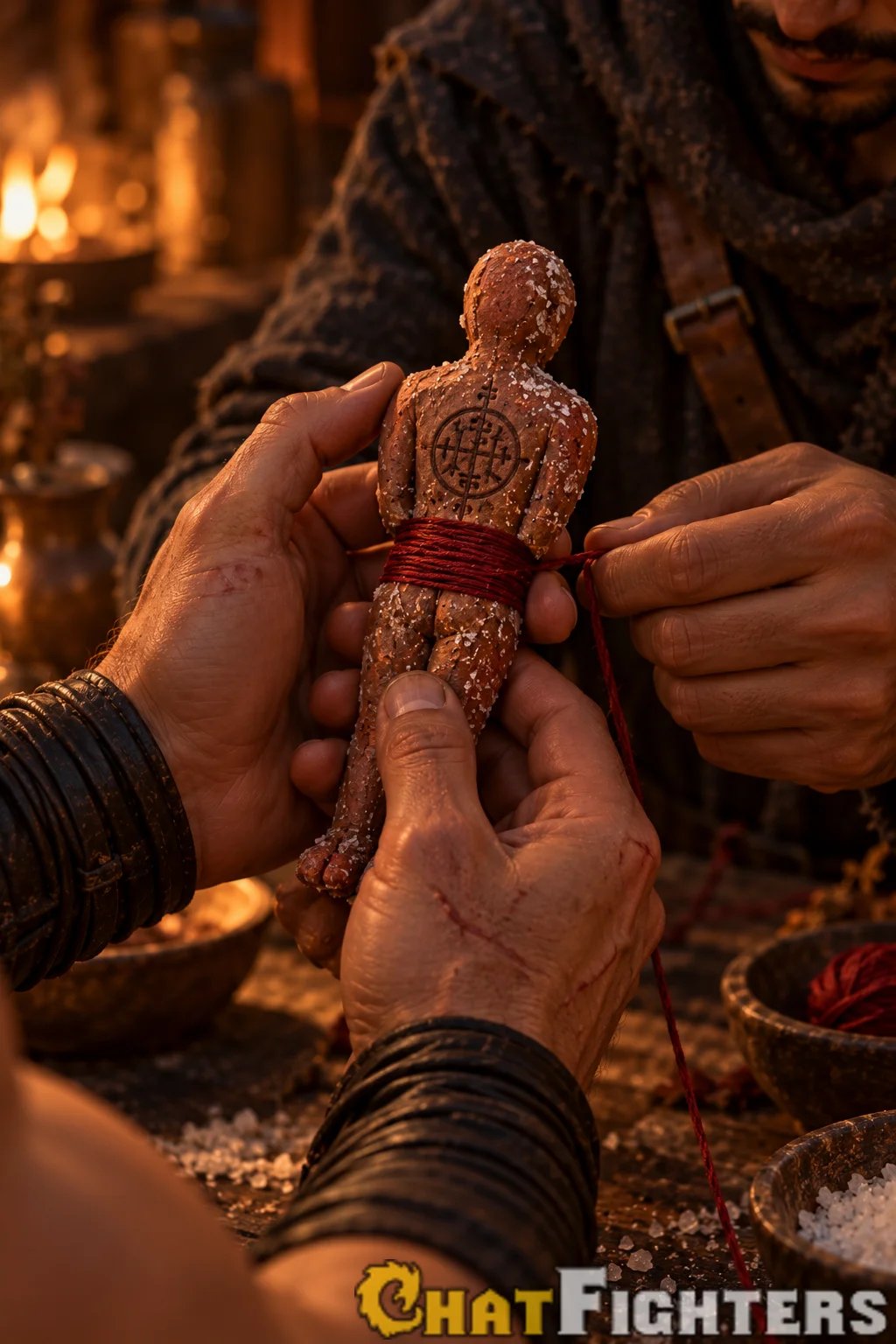
It was red clay mixed with salt, no longer than my palm. Its arms lay tight against its sides. Its face was smooth.
“Where did you get that?” Nerin asked.
“A supply cart below the southern road.”
“A Black Sun cart?”
I nodded.
“How long ago?”
“Six nights.”
He looked at me.
“The voices started six nights ago.”
“Yes.”
I hated that he knew this, too.
“Callen.”
The admonishment in his voice was palpable.
“I thought I could break it.”
I showed him the knife mark across its middle. He turned the figure over. A black circle had been carved into its back. Under the circle were shallow grooves, too regular to be cracks. Nerin put it down carefully.
As children, Nerin and I had done this before. We made burden dolls for Emberwane. Clay from the mountain, a little clean salt, red thread around the waist. We told the doll what we were afraid of, then broke it at dawn.
I had once confessed that I was afraid of watching Nerin die. The doll would keep the worry until I broke it the next morning.
Nerin had worked in the military infirmary when the Black Sun entered our fortress. He had seen what the priests collected. Shrouds. Household figures. Memorial bowls.
“They took these from the houses,” he said. “I thought they meant to burn them.”
I desperately wanted to keep anything from them. To reclaim something of what we had all lost.
“This one was wrapped separately,” Nerin stated. “Was there anything with it?”
“No.” I shook my head. Nerin's eyes closely watched my face. I made myself meet them.
At last, he said, “We will do the release properly.”
“You know how?” The elders had taken care of that. Now they were gone.
“I know how it used to be done.”
He did not promise more than that.
When he turned away, I checked the doll's back. One of the grooves had filled with salt. There were three white lines that morning. Now there were two.
I rubbed my wrist beneath its wrapping. The skin no longer felt so tight.
I covered the doll before Nerin could notice.
We prepared the room as our families had. Nerin placed the turnip lanterns on the stairs. He covered the bronze mirror and the faces of the memorial carvings. On Emberwane, we remembered the dead without asking them to appear.
He put an empty bowl at the table. The absent place belonged to everyone who would not share the winter. No one sat there. Nerin laid a spoon beside the bowl, then hesitated and returned it to the shelf.
“For the dead, the bowl stays empty,” he said. “If you feed someone, you are asking them to stay.”
A bundle of bitter herbs went beneath the chair. A small hearthstone was turned toward the door. Then, Nerin extinguished every lamp except the fire.
“For those we remember,” he said.
“Warmth until morning,” I replied.
His voice caught on the answer. I pretended not to notice.
He took out the red thread.
“Hold it.”
The doll felt colder than the room.
Nerin wound the thread once around its middle.
“Name what you need to leave.”
I looked at the covered carvings. There were too many names.
My father. The men at the southern gate. A boy who had asked for water after we had stopped giving it to the dying.
“Whatever is still waiting for me,” I replied.
Nerin stopped. He looked older than twenty-five. “That is not something you can lay down. That is an offer to keep looking.”
Once again, I had the feeling he knew me better than I knew myself.
A sound came from beneath my chair, and we both looked down. Nothing followed.
Then, after enough silence to make me lean closer, something scratched beneath the stone.
“Please?”
He knew what I wanted to do. Why was I asking permission?
Nerin took the doll from my hands.
“Stay where you are.”
I knelt.
“There is a storage hollow under that slab,” he said. “Not a passage.”
The voice came again. Small. Almost out of breath.
I pictured someone curled beneath the stone, unable to lift it from below. Someone who had heard us moving about the sanctuary and waited until we were close enough to help.
The scratching grew more desperate, so I worked my dagger into the seam and raised the stone.
The doll lay underneath. I turned and looked at Nerin.
Nerin still held one.
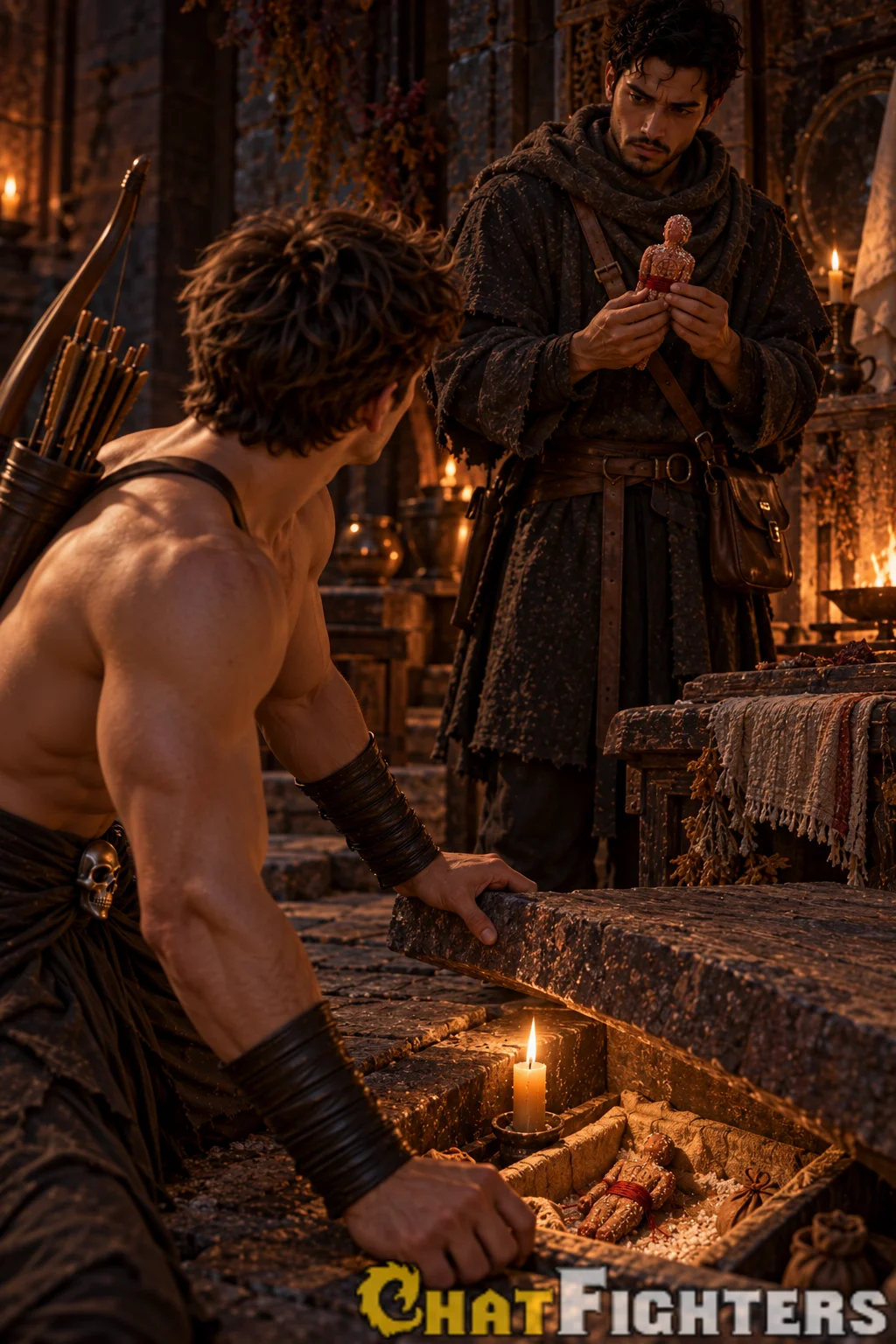
A hand closed around my wrist. It pulled hard enough to drag my shoulder into the opening.
I struck the floor with my free hand and braced my leather boot against the table leg. The grip shifted. Something sharp entered my forearm. My face twisted in pain, yet I did not scream.
I felt it move beneath the skin.
Nerin dropped beside me and caught my belt.
“Do not pull straight back. You will tear it.”
I drove my dagger into the hollow, and the blade struck stone.
The grip vanished.
Nerin hauled me clear as blood ran from three punctures below my elbow. Gently, he pressed a folded cloth over them.
I looked into the opening.
Nothing. Not even the doll.
“Where is yours?” I asked.
He glanced at the floor.
The figure he had dropped was gone, too.
He bound my arm tightly. Blood was flowing faster.
I sucked air through my teeth.
“I know,” he said.
“You are making it worse.”
“I am stopping the bleeding.”
His thumb rested against the pulse inside my wrist.
I knew that touch. He had steadied me through fevers, held pressure against wounds I could not bear to look at, and once spent an entire night beside my bed after an arrow tore through my shoulder. I woke to find him asleep in a hard wooden chair, his hand still wrapped around mine. He had been awake for nearly two days tending the wounded, yet he had stayed with me.
When I moved, he woke immediately.
“You are hurting,” he said.
“Not much.”
He smiled, tired enough that it scarcely reached his eyes.
“You have never been good at lying to me.”
Then he leaned forward and rested his forehead against mine. I remember the warmth of his skin and the relief of knowing I had survived long enough to see him again.
“Look at me.”
I did as he asked.
“Tell me where you are.”
“The sanctuary.”
“Who am I?”
“Nerin,” I smiled.
“Good.”
He smiled back.
He remained kneeling beside me until the bleeding slowed.
Outside, a horn sounded. I knew the signal before it ended.
Men pinned down. Trapped. Archers needed for covering fire, the rain of arrows that ensured an escape.
Nerin closed his eyes. He stood in the doorway while I took my bow.
“It learned the bell did not work,” Nerin stated.
“That does not mean there is no one out there.”
“No. It means you will accept anything it offers as long as it sounds hurt.”
I reached past him for my quiver. He caught my injured arm, an accident caused by his haste to stop me.
The pain made me turn too quickly, and he let go.
“I am sorry,” he said.
I hated that. I hated that he had to apologize when I was the one leaving him.
“Once,” I said, “I broke formation and three men came home.”
“I know. I helped wash them and tend to their wounds. And yours.”
I still remember Nerin's touch. Soft and comforting, even when stitching up the long scar on my back. He has a gift.
“They told me to hold my position.”
“And you were right that time.”
There it was. That time.
I could not make myself build a rule around the possibility that next time I would be wrong.
There might have been men bleeding in the granary. I could have stayed beside Nerin and listened to the horn fade, but I would have spent the rest of my life wondering whether someone had died waiting for me.
You understand why I went.
The pressure beneath my wrist eased.
I waited a moment before reaching for the latch.
The horn came from the granary.
I crossed the courtyard low, keeping the broken wall to my left. I had exactly nine arrows. I had fixed the fletching on them meticulously. It was as comforting as Nerin's touch.
Almost.
A Black Sun shield moved inside the doorway, and I shot the man behind it. The draw sent pain from my forearm into my shoulder, but the arrow struck high in his chest.
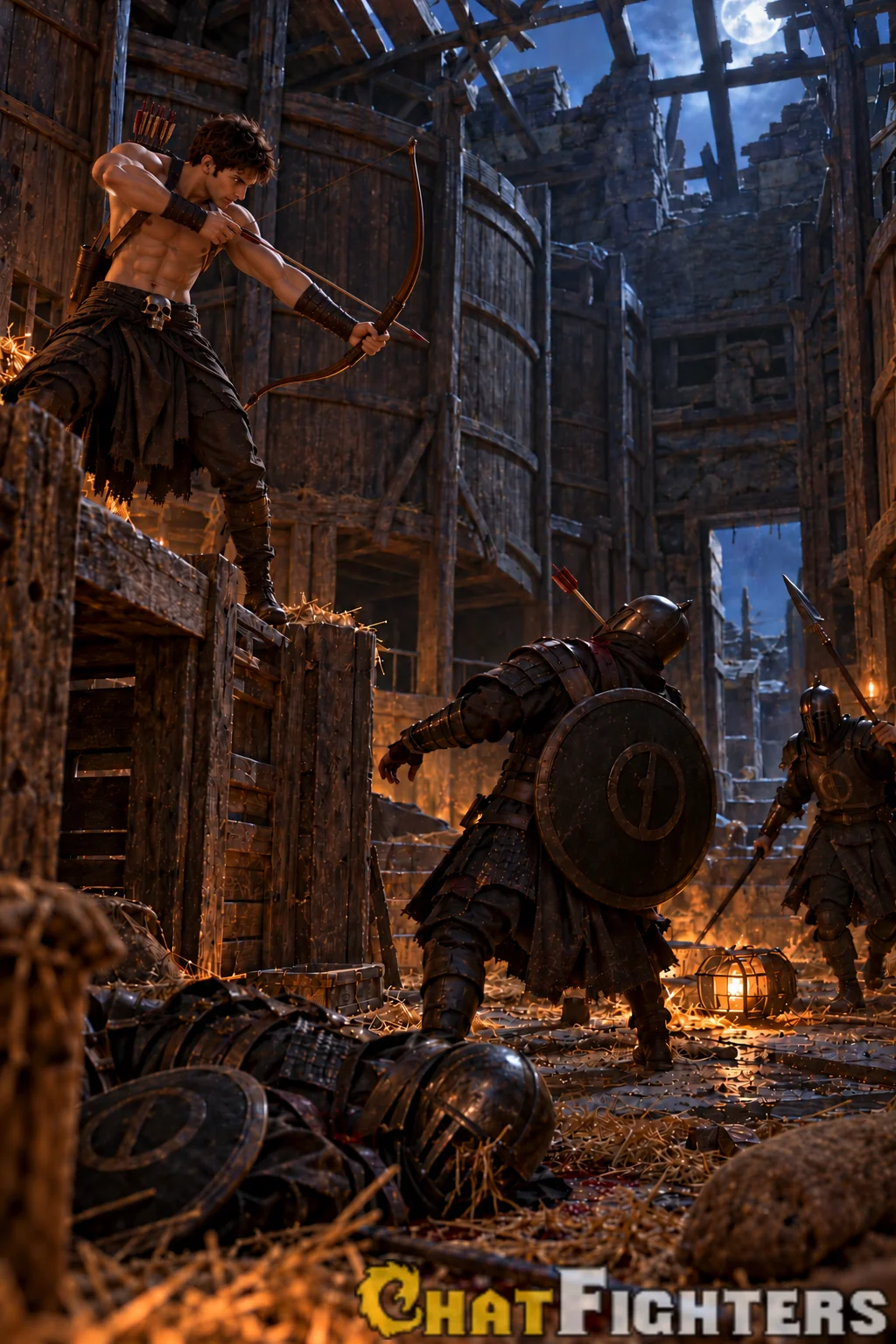 A second soldier advanced between the empty bins. I climbed a ladder next to a partition, got above his shield, and put an arrow beneath his arm.
The third attacked me with a spear. I trapped the shaft beneath my elbow and stepped inside its reach. My wounded arm failed.
The point of the spear tore across my ribs.
I staggered into a beam, and the soldier followed. I drew my dagger, struck beneath his breastplate, and drove my knee against his leg.
He fell without a sound.
For a moment, I stood over him breathing hard.
Blood warmed my side. Nerin would be angry with me but would tend to me all the same.
Then I noticed the bodies.
No breath inside the helmets.
No blood beneath them.
Straw pushed through the first soldier's salted visor.
Behind me, someone began to choke.
I turned, and the figure at my feet had moved.
Its chest rose.
I crouched despite the pain and cut the armor straps.
There might have been someone inside.
The choking grew weaker. I worked faster, tearing at the leather until my injured fingers slipped against the buckles.
You would have opened it, too.
I tore the breastplate away.
The doll lay inside, wrapped in a strip of our company banner.
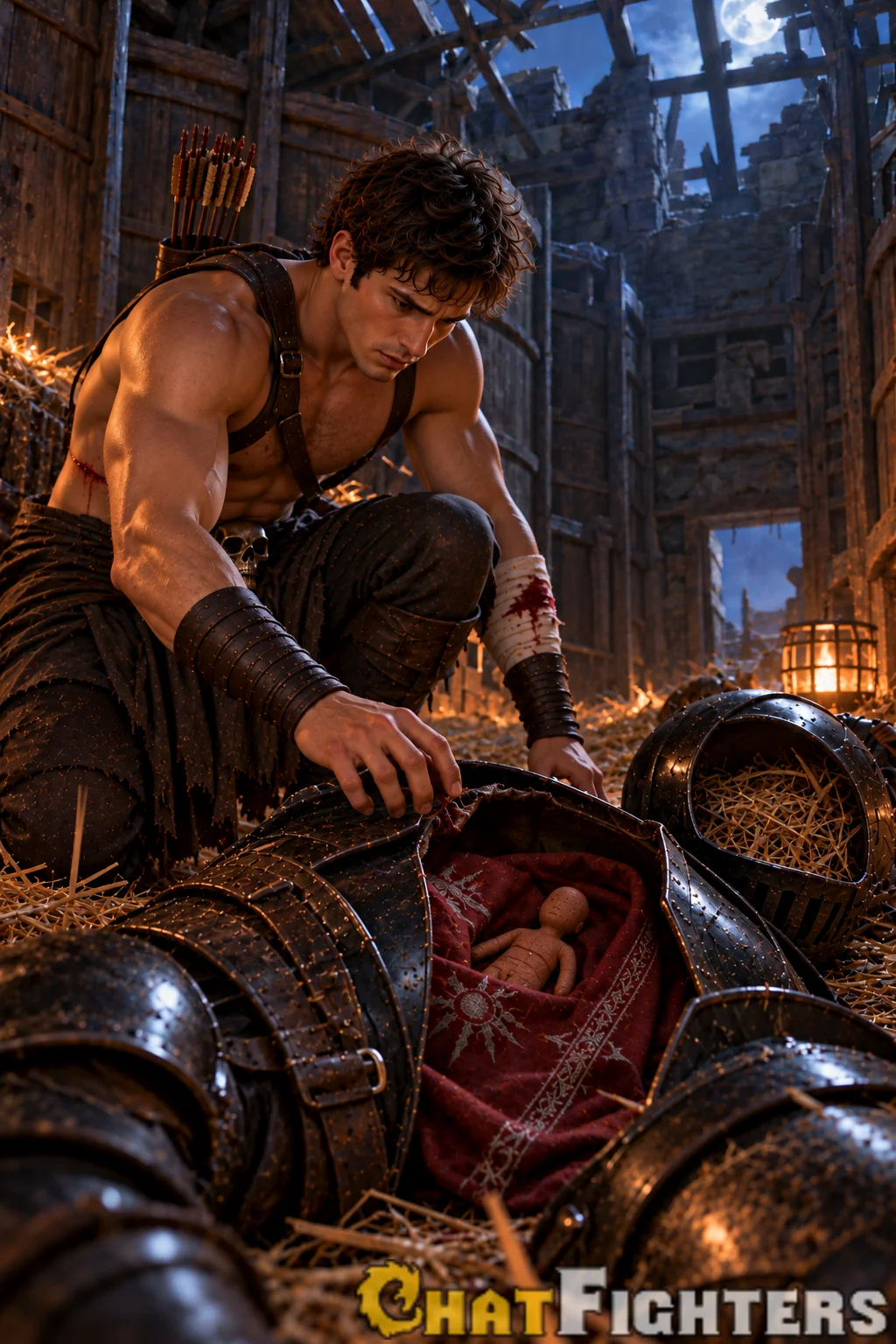
I knew the silver embroidery along the edge. I had mended it myself.
When I lifted the figure, salt entered the cut across my palm.
The pain was immediate.
I dropped it, but white grains remained in the wound, grinding deeper when I closed my hand.
The choking stopped.
I stood in an empty granary with blood running down my side.
The Black Sun had starved us here.
Now it had found a way to make the emptiness ask for help.
I looked at the doll among the straw. It had no mouth, no lungs, and no one hidden beneath its clay. Yet for a moment, we had both believed someone was suffocating.
The thought stayed with me as I returned to Nerin. He met me at the sanctuary door.
He saw the blood and swore.
“Sit.”
I knew better than to do anything other than what he asked. He was rarely angry.
“The doll…” I tried to explain.
“Put it on the table,” he interrupted.
He knew again.
He used my knife to cut away the cloth at my waist. Despite his anger, he tenderly washed the wound beneath my ribs.
It was shallow, but long.
“You need stitches.”
“Then stitch it.”
He gave me a folded strip of leather.
I stared at it.
“You kept that?”
“I kept it because you kept needing it.”
I was slightly embarrassed, but also glad for the gesture.
It was the same kind of folded leather he had given me at sixteen, when I tore my palm during training and begged him not to put it in the ledger. I did not want anyone to know about my injury.
He kept that to himself.
I bit down, and his hands moved deftly as he began.
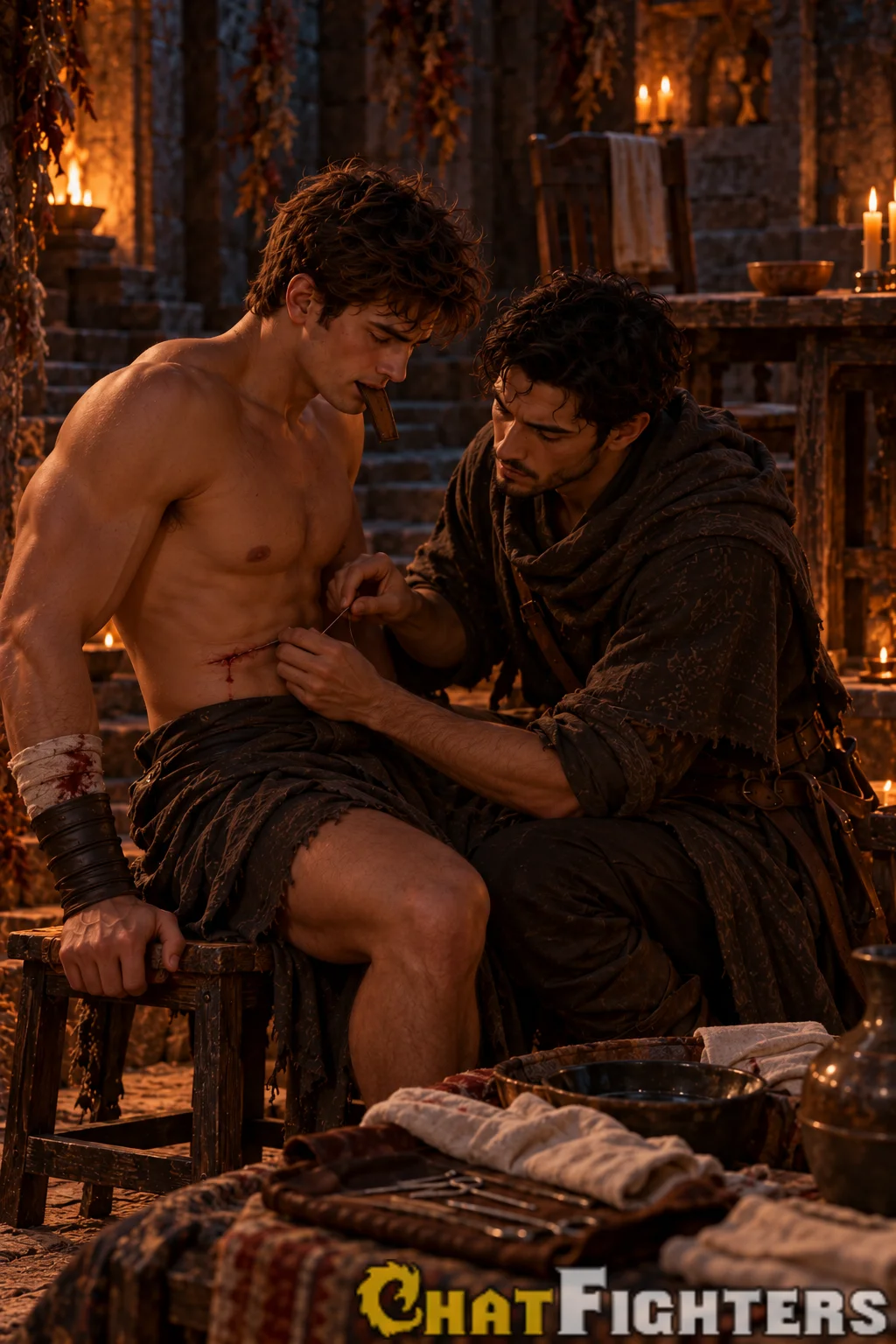
He worked close, his body close to mine, the lamplight catching the scar in his eyebrow. When my breathing changed, he paused without being asked.
He also knew my body better than I did.
He should.
The first time he stitched me, I was sixteen and determined not to show pain before the older soldiers. Nerin sent them away and closed the infirmary door.
“You do not have to be brave for me,” he said.
I nearly cried at that.
Four years later, he still waited until we were alone before asking how badly something hurt. He had never mistaken my silence for strength.
“You always hold your breath until you nearly faint,” he said.
“I do not.”
“You do.”
“Then stop making it hurt.”
He smiled despite himself.
“I am trying.”
He finished and pressed a clean dressing over the stitches. It stung, but I knew I would be fine.
For a moment, there was nothing left to fear for me. Nerin had repaired what he could. I was warm, breathing, and no longer bleeding.
He helped me sit upright, keeping one hand behind my back until he was certain the stitches would hold.
“There,” he said softly.
I caught his wrist before he could move away.
“Thank you.”
He looked at me for a long moment. “I wish you would let me keep you safe,” he said.
I wanted to tell him that he already had. More times than he knew.
Instead, I held his hand a little longer. His thumb brushed the inside of my wrist.
This time, I noticed the thread beneath his fingers.
Then he looked at the doll.
The guest bowl was empty. The chair faced us, and neither of us moved it.
A spoon lay beside the bowl.
Nerin glanced toward the shelf where he had left it. He took the spoon away again.
When he returned to the table, it was back beside the bowl.
A crack had opened along the doll's back.
Nerin pried it apart with a blunt instrument from his satchel. I stood, slightly wincing, watching him work.
Inside were little clay objects. A ladder. A shield. A rolled bandage.
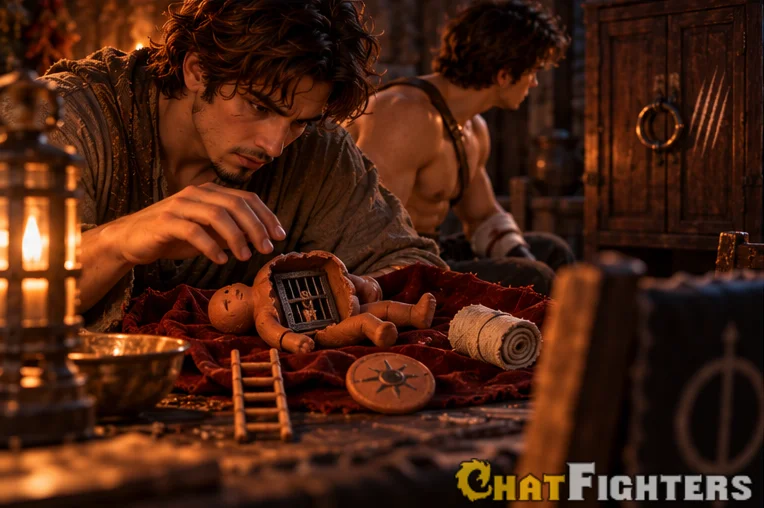
At the bottom lay something unfinished.
Four narrow grooves crossed a flat rectangular shape. A pale lump pressed against the other side. I leaned closer.
A barred door. A hand behind it.
From the cupboard came the scrape of fingernails.
Nerin froze, which alarmed me. He was stouter of heart than many warriors I fought beside.
I looked from the cupboard to the figure.
“Did you hear that before?” I asked.
“No.”
“Before I looked?”
“No.”
The scratching continued.
Nerin covered the little shape with his hand. The scratching stopped.
We sat still. Nerin's hand touched my wrist again.
I watched the cupboard, imagining the little hand trying to reach between the bars.
A single knock sounded from inside.
Nerin pressed harder against the clay, and the cupboard fell silent.
Afterward, we washed the doll's back together with water from his bag. Beneath the clay, the grooves formed a binding pattern.
Nerin's face changed. I did not like that look. He wore it when he knew someone was dying or when I had done something he did not like.
“These are shroud knots,” he explained.
I did not need an explanation.
I looked closer, and he showed me the sequence with a piece of loose thread.
“This closes the cloth. This lets the family release it.”
He reversed the loop.
“This keeps the end open.”
“For what?”
“For someone else.”
He looked toward the chair.
Not at the bowl.
Beyond it.
The Black Sun had not made a creature that could invent its own victims. It had made an unfinished rite.
The bearer supplied the memories. A witness supplied what might happen next.
Nerin discovered that much by covering the hollow in the doll.
I had discovered it earlier. I had not told him. He would have stopped me.
“Why the sound of scratching?” he asked.
“I thought of someone behind a door.”
“So did I.”
He waited.
I looked at the empty chair.
There was a third imagining in the room.
There had been one on the path, too.
A ruined bell ringing again. A man suffocating inside empty armor. A hand trapped behind a door. Each began as something that might be true. Each became something I could not leave alone.
Nerin lifted my injured wrist. Beneath the blood and salt, the red thread had loosened enough to admit his finger.
He looked at the chair.
Where you were.
A little more thread slipped free. Nerin spread the shroud across the table.
“We finish the old ceremony.”
I laid my bow beneath it.
“Names only,” he said. “No explanations.”
I began with my father. The eastern stair. The southern gate. After the third name, I started to explain about the water.
Nerin took my hand. “Just the name.”
I tried again. For a little while, there was only the hearth.
Then Nerin screamed outside. The man beside me went rigid.
The voice beyond the door begged me to open it.
I looked at the latch. Nerin tightened his grip.
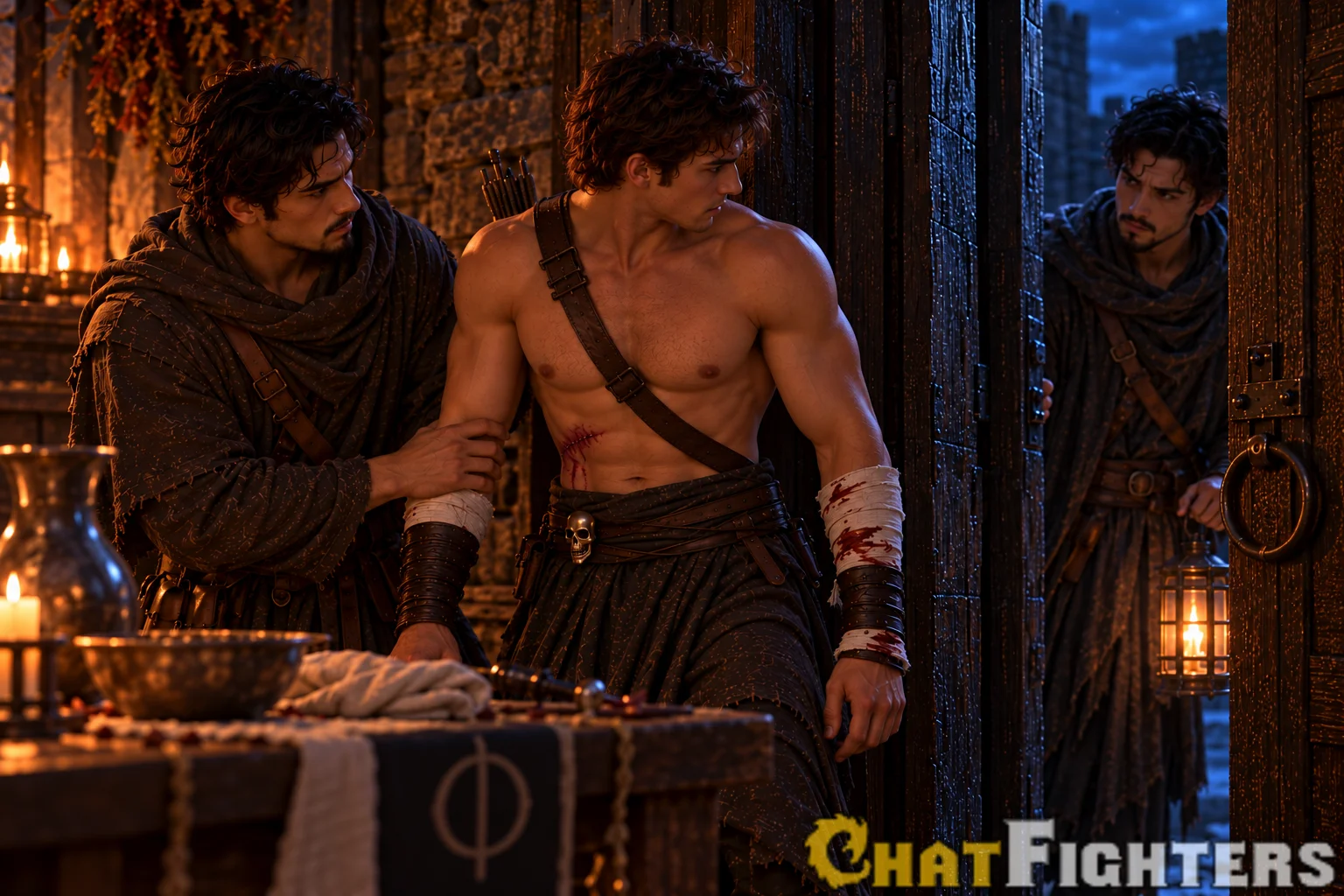
“It is using what you remember.”
The voice outside lowered. “You sleep with your left hand under the pillow,” it said. “Even when there is no knife there.”
I looked at the man beside me. He knew that. Nerin had slept beside me for years.
The voice knew it, too.
“When the nightmares begin, I put my hand between your shoulders. You pretend you have not woken.”
My mouth went dry.
Nerin always wanted me to be safe.
His face had gone pale. “It has your memories,” he said.
Or he did.
The voice outside spoke again, so softly that I nearly mistook it for the man beside me.
“You remember what I told you when you first came to the infirmary?”
I did. I was sixteen, frightened of the pain and more frightened of admitting it.
“You do not have to be brave for me.” Nerin had said those words only once.
I had never forgotten them.
The voice outside repeated them.
The man beside me closed his eyes.
Until then, the man holding my hand had been Nerin. The other was a voice behind the door.
But what if the real Nerin was outside?
What if something wearing his face had sat beside me all evening, tending my wounds with hands that knew exactly how I needed to be touched?
What if the thing beside me knew our memories because I had needed so desperately to trust it?
I saw the moment the possibility entered the room.
Nerin saw it in my face.
“Callen.”
His stern warning.
I had trusted him for years. For one breath, it was not enough.
The latch lifted.
I turned toward it. When I looked back, the hand around mine was gone. Nerin stood beside the guest chair, though I had neither seen nor heard him move.
“Stay away from the door,” he said.
I could no longer tell which direction his voice had come from.
The doll split and unfolded beside the chair.
Long legs dragged burial cloth across the floor. Armor shifted over a chest crusted with salt.
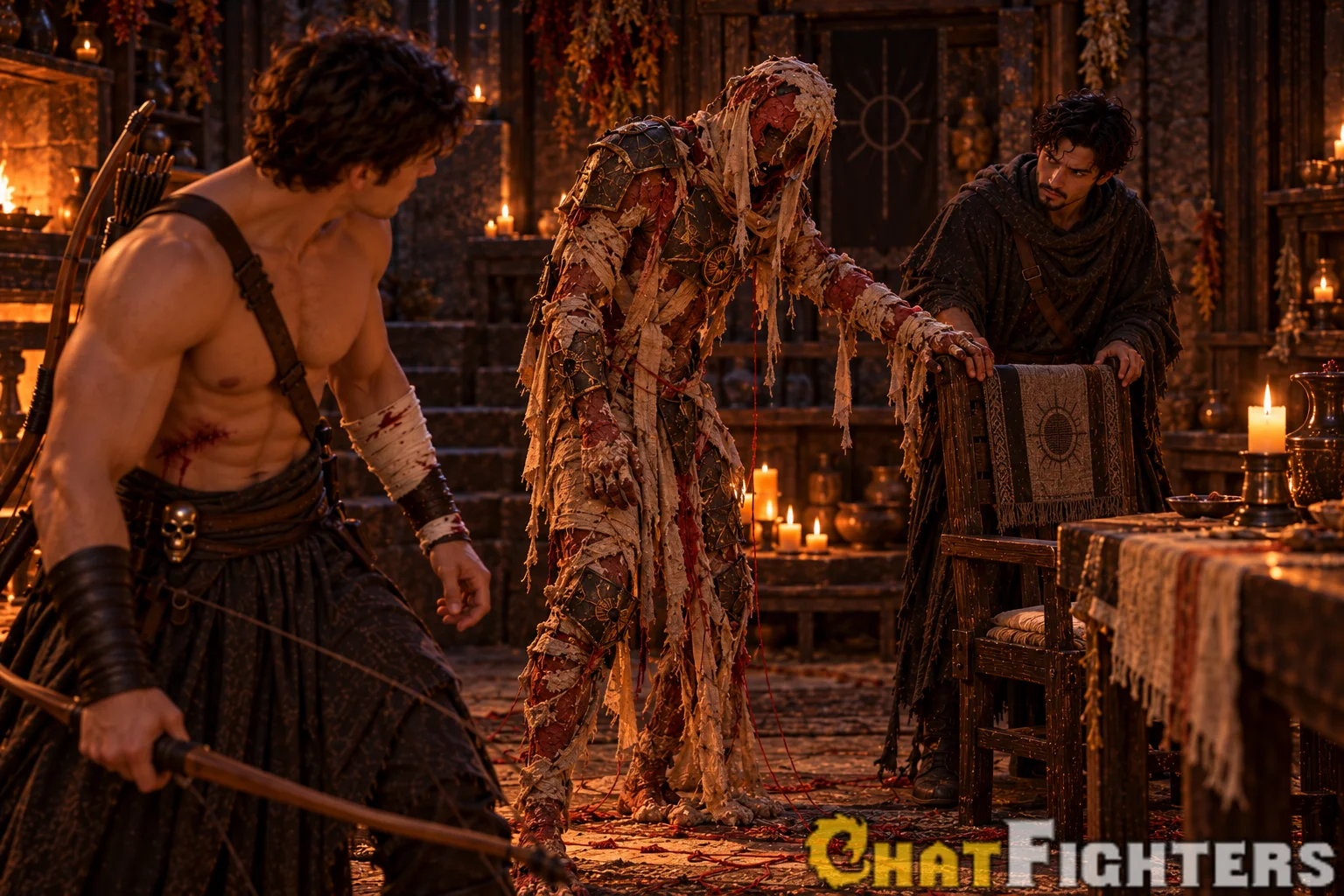
I reached beneath the shroud.
Nerin backed toward the hearth.
The thing turned after him.
I shot its knee. It tore free of the arrow.
A child cried out. I shot again.
The second arrow entered its shoulder.
It struck me across the face before I could draw a third.
I hit the table.
The stitches in my side pulled open.
Nerin shouted my name.
Someone else shouted it from the stairs. The voices overlapped so closely that I heard my name only once.
I drew the dagger and cut into the thing's chest. Thread spilled over my fingers.
Inside, someone was struggling to breathe. I almost reached in.
Then I saw the guest chair.
The cloth parted farther.
Something small moved beneath it.
I thought of the boy who had asked for water at the southern gate. I remembered how little he had weighed when I lifted him, and how his lips had moved long after he could no longer make a sound.
My hand moved toward the opening.
“No,” I whispered.
I stepped back. The thing followed.
I could not stop imagining what might be inside.
But I could stop opening it.
“The chair,” I told Nerin.
He dragged it behind the figure. I waited until it leaned toward him, then drove an arrow through the gathered cloth and deep into the back of the chair.
Nerin caught the loose thread. I took the other end.
The figure jerked. Thread cut into my injured palm.
I pulled harder. Blood ran down the binding.
The limbs folded inward. Armor struck the floor.
When we finished, the little doll sat in the guest's place. My blood marked its chest.
Nerin pressed both hands against my side.
“Stay with me.”
“I am,” I answered.
This was the first time I had felt him hurt me without warning.
“Look at me.”
Desperation filled his voice.
I did.
His hands were shaking. I had seen them steady through amputations, shattered bones, and wounds that would have made our other healers turn away.
Now, they shook against my skin.
“Nerin,” I whispered.
He looked at me.
I wanted to tell him I remembered every time he had brought me back from pain or fear. Instead, I took his hand and pressed it against my chest, where he had once placed mine.
His fingers curled around my hand.
For a moment, neither of us needed to speak.
For a moment, I wished I had brought him anywhere else.
Then I felt something slide against the skin beneath my wrist wrapping.
Nerin's hands remained pressed against my wound, but his eyes moved toward the guest chair.
The doll had not moved. The thread had.
“We can finish,” he said.
He was breathing hard.
“You say the names. You let the next sound happen without answering.”
“What if someone really calls?”
“You may never know.”
Nerin did not sound sure.
I did not like that.
That was the answer I had been afraid of.
He could stitch my side. Bind my arm. Sit awake with his hand against my back, protecting me from nightmares.
He could not promise that leaving someone alone would never kill them.
I looked at the empty chair. Nerin followed my eyes.
“Do not.”
He understood. Not all of it. But he understood enough.
I took the bow, and his hand closed around my wrist.
“You asked me here to help you.”
“Yes.”
“You said you wanted it gone.”
“I do.”
“Not like this.”
His grip tightened.
“Come back to me,” he said.
He had said those words before every dangerous patrol, sometimes lightly, sometimes with fear he could not conceal. I always answered with a promise.
This time, I could not make one.
I pulled free from his hand. The movement opened the wound in my palm again. There was blood on the grip.
I set an arrow to the string.
Nerin moved between us.
I stepped aside.
The guest chair remained where we had left it.
The bowl was empty. The spoon lay beside it. A length of red thread hung from the doll's smooth clay body.
Nerin looked at my wrist.
The binding had loosened.
He reached for my hand.
I moved it away.
I remembered waking with my hand against his chest, feeling his heartbeat beneath my palm.
He had never asked me to suffer alone.
And now I was asking someone else to bear what I could no longer endure.
You had stayed.
The thread loosened again.
Nerin saw it happen.
His expression changed.
“It needed someone outside the binding.”
I nodded.
“The priests made a trap for whoever found it,” he said. “But the witness made it work.”
He looked at me. Then at the chair.
I had used the same thing the priests had. I had made every unanswered cry sound like someone worth saving.
And I waited for someone to care enough to listen.
The last knot opened. One fine strand remained caught beneath my skin.
Someone struck the sanctuary door. I did not turn. Another blow.
Nothing tightened inside me. I did not picture someone bleeding in the cold. I did not reach for my bow.
I lowered it.
The relief nearly brought me to my knees.
Nerin caught me by habit. Then he let go.
He felt my steady pulse beneath his fingers. He looked toward the door. Then at me.
“What was in the cart?”
I said nothing.
“What else, Callen?”
He opened my pack. Beneath the spare tunic lay a folded sheet. I had cut away the upper half. The rest showed a table. A burdened man. A healer. An empty place.
Nerin spread it beside the hearth. He read what remained, then he looked at me.
“You knew.”
“I knew it needed a witness.”
“You brought me to complete the ceremony.”
“I needed you to keep me alive until…”
I stopped.
Until the thread loosened. Until the cries belonged to someone else. Until I could hear a knock at the door and leave it unanswered.
Nerin turned the sheet toward the fire.
Beneath the drawing, a line of small figures showed the binding passing from one wrist to another.
The final figure had no face.
Its hand rested against the doll.
Nerin folded the sheet, hiding the last figure.
I raised the bow.
He stopped.
“Callen,” he whispered.
There was no anger in his voice. Only the hurt of someone who had spent years keeping me alive and had finally understood what I intended to do with that life.
I remembered him asleep beside my infirmary bed, his hand still holding mine.
I remembered his heartbeat beneath my palm.
I remembered how safe I had felt when he told me I did not have to be brave.
And still I held the bow.
“He did not tell you one thing,” Nerin said.
“Nerin, please.”
“He found the instructions with the doll.”
“Stop.”
“The witness does not take his place by agreeing.”
The string pressed against my fingers.
Nerin stepped toward the guest chair.
“The witness takes his place by finishing the account.”
He pushed the chair away from the table.
The thread tightened against my wrist.
For one terrible moment, the old pressure returned.
Nerin saw me flinch.
“Leave it unfinished,” he said. “Whatever he tells you next, do not…”
From behind me, close enough to stir my hair, Nerin whispered, “Do not shoot.”
The man in front of me had his mouth open. I could see the scar through his eyebrow.
The hearth’s fire died.
For an instant, the scar seemed to be on the other side.
I remember my fingers locked against my cheek.
I remember deciding to hold them there.
What follows is the part I cannot make stay the same.
I loosed.
The arrow struck him beneath the collarbone.
For a moment, he remained standing. His hand rose to the shaft.
He looked at me as if I were a stranger who had entered the sanctuary wearing Callen's face.
I caught him before he hit the floor. His weight pulled at the torn stitches in my side.
I hardly felt them.
Beyond his shoulder, the covered mirror caught against its linen.
Beneath the lifted corner, I saw myself still standing with the bow drawn.

The cloth fell before I could look again.
He tried to speak.
Blood moved between his fingers.
I put my hand at the back of his neck, then rested it against his shoulder, as he had done so many times when the nightmares came.
“Look at me,” I whispered.
The words came easily. He had taught them to me. His eyes found mine.
I took his hand and pressed it against my chest, over my heart.
“You are here,” I whispered. “And so am I.”
It was what he had told me when I was sixteen and frightened of my own dreams.
His fingers moved weakly against my skin. For an instant, I thought he recognized the words.
His hand grew still. His skin was warm.
Something beneath my palm shifted with the dry sound of salt pouring into a bowl.
It might have come from the table.
I pressed my fingers against his neck, searching for a pulse.
There was one.
I think there was one.
His eyes shifted past my shoulder.
Toward the stairs.
One of the turnip lanterns rose as though someone had picked it up.
A hand cupped its light.
I knew the small, crooked finger, broken and badly set years before.
The hand against my chest had the same crooked finger.
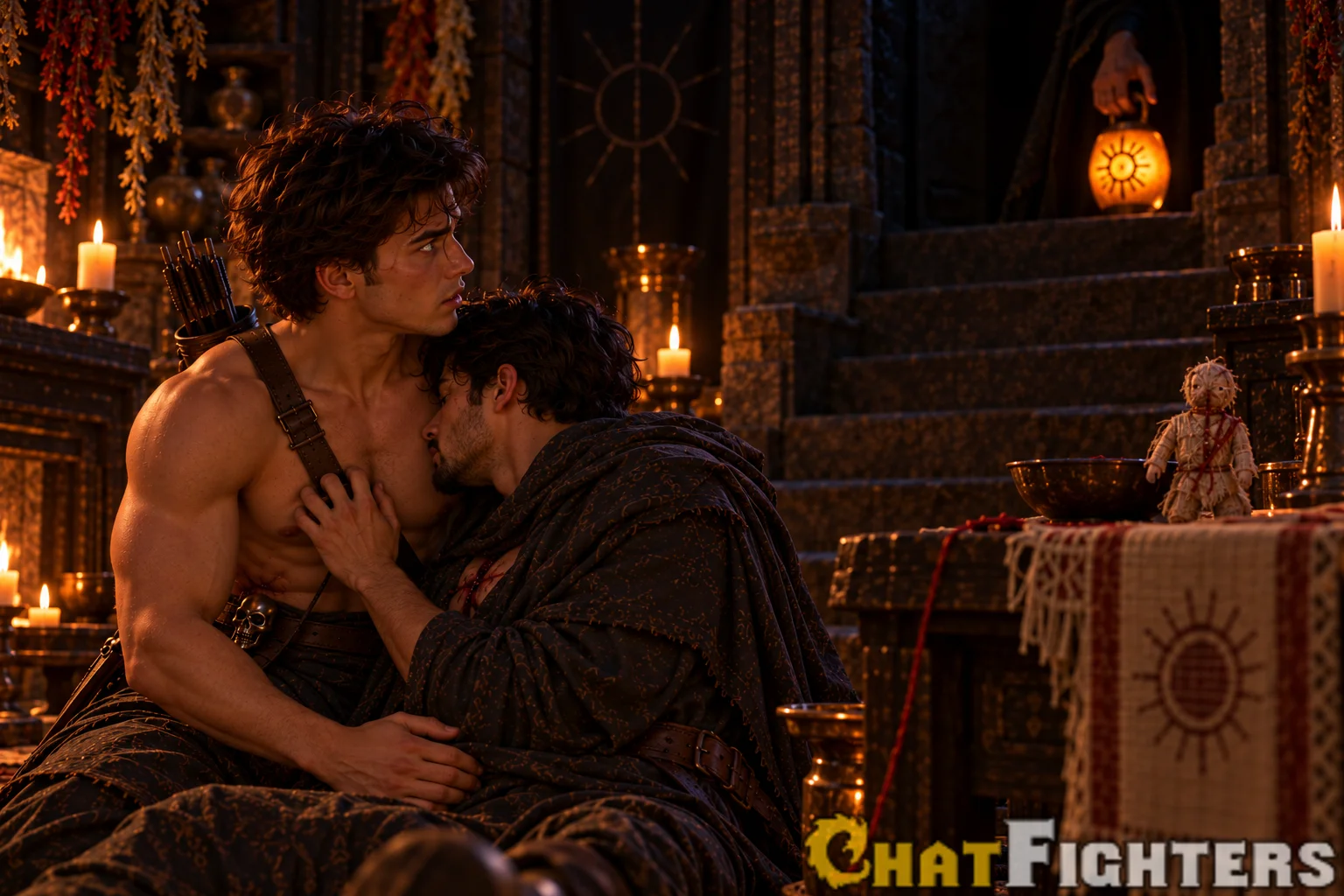
I looked down at the man in my arms.
The arrow was still beneath his collarbone. His eyes were open.
Behind me, the lantern moved farther up the stairs.
I could have followed it.
I could have stayed with him.
For the first time, I felt no command to do either.
The last strand lifted from my wrist.
It crossed the table, so thin I could see it only where the fire caught the salt upon it.
It passed the empty bowl. The unused spoon.
The little clay figure whose smooth face had never needed eyes.
It reached the place Nerin had tried to leave empty.
The final white line on the doll emptied.
A narrow red loop opened around my wrist.
Somewhere beyond the table, another drew tight.
The knocking stopped.
I looked down at Nerin again.
His hand still rested against my chest where I had placed it.
I could not tell whether the man in my arms was the one who had held me through the dark.
I could not tell whether the other Nerin had escaped.
I could not even tell whether I had truly released the arrow.
But for the first time, I could bear not knowing.
Nerin's hand rested against my heart. I could have waited for his fingers to move.
Instead, I watched the red thread slip from my wrist.
It crossed the table and wound itself around your hand.
In the distant ravine, a bell began to ring.
I did not move.
When you turned in the chair to listen, a smile crossed my face. 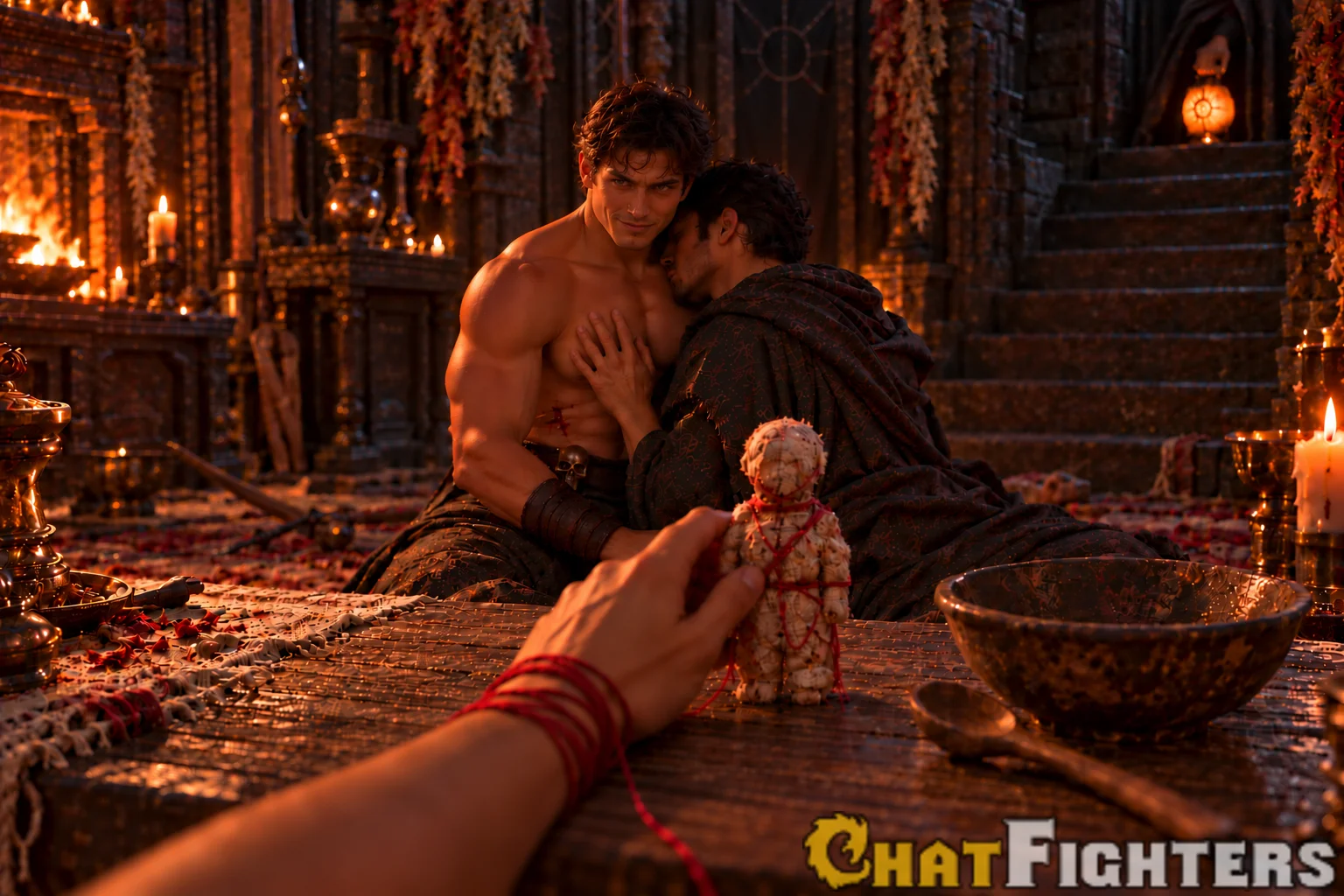
Published: 2026-10-21, viewed 69 times.
Dream Breaker
2026-10-21 22:20A beautifully written and atmospheric story that blends dark fantasy, psychological horror, and emotional depth. The bond between Callen and Nerin gives a powerful emotional core, while the supernatural mystery kept me guessing until the very end. The haunting imagery, moral dilemmas, and ambiguous conclusion make this a truly memorable and thought-provoking read. Really a very special story for Halloween. Thanks Callen!!
Freaker
2026-10-21 18:28What an original story. From the first strange bell, The Last Guest of Emberwane makes the reader wonder what is really happening. Is someone calling for help? Is something being remembered? Or is something else slowly finding a way in?
The story never rushes to answer those questions. Instead, it lets doubt grow little by little.
Callen and Nerin seem to know each other so well that nothing should be able to come between them.And yet, on this last day of Ashfall, even trust begins to feel fragile.
That is where the story becomes especially unsettling. Emberwane feels like Halloween from another world. The last harvest. Turnip lanterns. The empty place at the table. The dead remembered at sunset. A tradition that feels ancient, familiar and mysterious at the same time.
And the more the story continues, the more the reader begins to question not only what Callen sees and hears...but also his own place in the story. That final feeling is perhaps the strangest of all.
A haunting, clever and very personal Halloween tale, far from traditional monsters and classic horror stories, proving that sometimes the most disturbing fear is simply not knowing what is real anymore.
Thank you Callen Fortier for sharing The Last Guest of Emberwanewith THE HIGH TABLE and for taking part in THE HIGH TABLE Halloween Contest 2026.